
BACK
Apr 13, 2026

Capital doesn’t deliver gender outcomes, institutions do: Lessons from an ex-post evaluation of a gender TA initiative in Jordan

Written by: Jenny Holden, Principal Consultant - Kore Global, Katie Turner, Associate - Kore Global, Tamara Abdel-Jaber, Associate - Kore Global, and Kristin Duchateau, Gender Focal Point - OeEB

Gender-focused technical assistance (TA) is increasingly recognised as essential to expanding women’s access to finance — yet it remains underutilised across much of the investment landscape. While capital commitments to gender-lens investing continue to grow globally, this progress is uneven across regions. In the Middle East and North Africa (MENA), for example, the venture capital ecosystem remains highly exclusionary: women-only founding teams receive just ~1–2% of total VC funding, despite broader growth in startup investment. This persistent gap reflects not only capital constraints but deeper structural barriers within investment ecosystems — including bias in investment decision-making, limited networks, and weak institutional capacity to identify and support women-led businesses. As a result, comparatively less attention is paid to the institutional capabilities that determine whether financial institutions can effectively serve women entrepreneurs — reinforcing regional disparities and limiting the impact of capital alone.

This is not simply a question of resources. It is also a question of strategy and design. Without a clearer understanding of what makes gender TA  work, and how it can drive institutional change, investors risk overlooking one of the most powerful levers for translating gender ambition into operational reality.

In 2025, Oesterreichische Entwicklungsbank (OeEB), the Development Bank of Austria,  partnered with Kore Global to undertake an independent ex-post evaluation of a gender-focused TA initiative delivered with Sanadcom for business finance (Sanadcom), a Jordanian SME lender, in collaboration with Women’s World Banking. The evaluation was commissioned by OeEB to assess the effectiveness of the gender TA on Sanadcom’s performance as well as to generate strategic learning to inform OeEB’s future gender TA and advisory support. 

Read the full evaluation report here.

The findings offer practical insight into how gender TA can move financial institutions from gender intention to integration — and why design choices matter as much as delivery.

Moving from gender ambition to institutional practice

Sanadcom operates in Jordan’s “missing middle,” financing micro, small, and medium enterprises (MSMEs) that are too large for microfinance yet frequently underserved by commercial banks. Women entrepreneurs face additional structural barriers, including limited collateral ownership and persistent perceptions of higher credit risk.

Rather than launching a standalone product for women, the TA initiative focused on strengthening the institution itself. Credit policies were revised, gender considerations embedded into risk assessment and client engagement, staff capacity strengthened through integrated training, IT systems upgraded to support sex-disaggregated reporting, and incentives aligned with expanding outreach to women entrepreneurs. The emphasis was on institutional strengthening to position Sanadcom as a leader in gender finance and better positioned to meet the needs of women-led MSMEs. 

Evidence that technical assistance can drive institutional change

The evaluation found that these institutional changes translated into measurable results. Women’s share of Sanadcom’s portfolio increased from 6.4% in 2020 to 9.9% in 2022, before stabilising at approximately 8.6% in 2025 amid broader economic volatility— marking meaningful progress in reaching a historically underserved segment despite contextual challenges.

Portfolio performance told an even stronger story. Portfolio at Risk (PAR) for women declined from 36.3% in 2020 to just 6% by 2024, ultimately outperforming the male borrower portfolio. This finding challenges persistent assumptions about the risk profile of women-owned enterprises and suggests that gender-responsive lending can strengthen credit outcomes.

Operationally, the TA introduced greater consistency in credit decision-making, streamlined processes, and strengthened Sanadcom’s reputation with investors and ecosystem actors. 

The evaluation also documented internal cultural shifts: Sanadcom appointed its first female CEO and achieved near gender parity across its workforce — notable progress in a sector where women remain underrepresented in leadership.

Effective TA, the findings suggest, can reshape how FIs function — not simply what they offer.

Five design choices for meaningful technical assistance delivery 

While contexts differ, the evaluation surfaced several features that appear particularly influential in determining whether gender TA leads to lasting institutional change.

  1. Ground the intervention in institutional reality.
    The initiative began with a detailed diagnostic of Sanadcom’s operations, identifying gaps in credit processes, staff capacity, and gender integration. Anchoring the TA in operational priorities — rather than applying a pre-defined TA design — strengthened relevance and fostered internal ownership.
  2. Embed gender into core business functions.
    Gender was integrated across Sanadcom’s credit policies, risk frameworks, training, and client engagement instead of being treated as a parallel workstream. Positioning gender responsiveness as part of institutional systems increased the likelihood that practices would endure beyond the project.
  3. Align incentives with strategic objectives.
    Introducing higher employee bonuses for acquiring and retaining women clients linked staff performance directly to institutional gender goals. This alignment proved critical in translating policy into everyday behavior.
  4. Invest in systems alongside skills.
    Training was reinforced by upgrades to Sanadcom’s IT infrastructure that enabled gender-disaggregated data collection and more systematic reporting. Institutional change rarely results from knowledge alone; it is sustained when policies, processes, and data systems support new ways of operating.
  5. Secure leadership commitment early.
    Engagement from Sanadcom’s senior management helped embed gender priorities within strategic decision-making and contributed to broader organizational shifts, including progress toward gender diversity in leadership. Where leadership alignment is strong, TA  is far more likely to catalyse durable transformation.

Taken together, these lessons highlight how TA is most effective when treated as a strategic instrument for institutional strengthening rather than a set of discrete support activities.

Strengthening institutions to accelerate impact

As development finance institutions sharpen their focus on additionality and long-term impact, thoughtfully designed TA  is becoming increasingly central.

The Sanadcom evaluation underscores how capital alone does not deliver gender outcomes — institutions do. Policies, incentives, systems, and leadership ultimately determine whether financial institutions can serve women entrepreneurs effectively and sustainably.

For Sanadcom, the results have been transformative. As Rana Hamdan, CEO of Sanadcom, explains:

“Our mission at Sanadcom is to bridge the financing gap for underserved MSMEs, particularly women-led businesses. This initiative has strengthened our ability to deliver tailored, inclusive financial solutions that empower women entrepreneurs to grow, create jobs, and contribute meaningfully to Jordan’s economy. In addition, Gender-focused technical assistance has been a turning point for Sanadcom. It enabled us to move beyond ambition and embed gender responsiveness into our core operations — from credit policies to client engagement — strengthening our ability to serve women-led MSMEs in a more sustainable and impactful way.”

For OeEB, the evaluation provides actionable insight into how gender TA can deepen the impact of its investments. For the wider investor community, it reinforces the importance of approaching gender TA not as a nice-to-have offering, but as a strategic lever for institutional change.

At Kore Global, we partner with investors, financial institutions, and foundations to design and deliver technical assistance, research and evaluations that strengthen systems, build institutional capacity, and advance gender and development outcomes. 

Learn more about our approach to Technical Assistance and IMM in our two-page overviews

BACK
Mar 23, 2026

Sustainable agriculture requires sustainable care: Insights from roundtables with Ecuadorian agribusinesses

Written by: Becky Zelikson and Rebecca Calder

When Kore Global and IDB Invest convened leaders from Ecuador’s flower, banana, vegetable, and shrimp sectors in Quito and Guayaquil to discuss care in their agribusinesses, the conversation moved quickly beyond policy compliance. What emerged was a frank reckoning with a challenge hiding in plain sight: the invisible weight of unpaid care work is quietly undermining the productivity, stability, and competitiveness of Ecuadorian agribusiness — and the companies that have started to take this challenge seriously are already seeing measurable returns.

The sessions brought together a diverse group of agribusiness representatives to explore how care responsibilities — childcare, elder care, and support for family members with disabilities — affect workers and operations alike. The headline finding was unambiguous: care is not a peripheral social issue. It is a material business risk. And treating it as one is the difference between a company that struggles with chronic absenteeism and turnover, and one that reduces staff attrition.

Women are essential to agribusinesses, but unpaid care work constrains them

In Ecuador, women spend 52.4 hours per week on unpaid care and domestic work, compared to just 13.72 hours for men. These are not just statistics — they are a structural drag on workforce participation, and agribusinesses absorb the cost whether or not they track it.

Women make up more than half the workforce in crops such as flowers, coffee, fruits, and vegetables, prized for their precision and reliability in labour-intensive tasks, including harvesting, selection, and packaging. Yet, as roundtable participants described, the care responsibilities that await them at home each evening significantly challenge their well-being, making consistent, full employment difficult to sustain.

The testimony from the banana sector was particularly vivid. Female workers frequently begin shifts at dawn or work into the night, returning home to find their children already asleep, unable to help with homework or simply be present. In the shrimp and packing industries, many women are single mothers with no safe or affordable childcare alternative. Participants described mothers monitoring their young children via mobile phone cameras while on the production floor — a makeshift solution that speaks to the scale of the gap between workers’ needs and available support.

“These mothers… leave their young children alone… the [women working in the packing facility] have very limited resources, and you know what they invest in? They invest in cameras. They leave cameras set up [at home and] are monitoring them from their cell phones… little ones of 7 or 9 years old are left alone, exposed.” (Roundtable participant)

Cultural pressures compound the challenge. In some rural communities efforts to improve women’s financial independence are met with resistance at home — what participants called “husband backlash” — meaning that progress made inside the workplace can be undone the moment a woman returns to a domestic environment that has not shifted alongside her. As one participant observed, workshops on empowerment can leave women feeling motivated, only for them to arrive home to a household where the decision-making structure and unpaid care work distribution make none of it applicable. The implication for businesses is significant: workplace care initiatives work best when they are connected to broader community and cultural change.

The operational impact of care: What the data shows

Absenteeism figures from companies at the roundtable revealed a pronounced gender split: while about 70% of male absenteeism is linked to accidents from sport or hobbies, 70% of female absenteeism is attributable to caring for family members. Despite this observation of the impact of care needs on absenteeism, most companies represented at the roundtables acknowledged they do not yet have consolidated caregiver data. Absenteeism is tracked; the reasons are often recorded, but the cross-referencing of absence data with care responsibilities rarely happens. As one participant put it, senior management frequently resists care initiatives precisely because they cannot see the link between an employee’s childcare crisis and a productivity dip two days later. The data exists in different parts of the organisation — it simply hasn’t been integrated.

This is starting to change. One company represented at the roundtable described plans to add a dedicated caregiver identification field to its SAP onboarding system, allowing it to build, for the first time, a structured picture of which employees have care responsibilities. Critically, this initiative was estimated to cost almost nothing beyond staff time. The barrier to gathering this information is rarely financial — it is organisational will and the know-how to ask the right questions sensitively.

Relatedly, participants emphasised that care-related questions can feel invasive, particularly when they come from HR or talent departments, where employees may fear the information will affect their performance evaluations. Several companies had found that routing these conversations through social welfare workers — who are seen as supportive rather than evaluative — produced far better results. The angle of approach matters as much as the question itself.

What works: Organisational care practices that deliver results

The roundtables were not merely a catalogue of problems. Participants shared concrete initiatives that have produced tangible results — and the outcomes are compelling.

Coupon Book of Hours (Cuponera de Horas). One dairy product company introduced what it calls a “coupon book” of flexible time: operational staff receive eight hours per month to use for personal and family needs, taken in coordination with their direct supervisor. The effect has been a significant reduction in unannounced absences and last-minute no-shows — disruptions that are disproportionately costly in time-sensitive agricultural operations such as harvesting and packing. Crucially, the scheme also generated reciprocity: when production pressures required staff to extend shifts or cover additional hours, employees were far more willing to do so, having already received flexibility in return. Reception among staff was strongly positive, with the benefit rated as meaningful even though it is non-monetary.

Expanding women workers into higher-value field roles. In the banana industry, one company identified desoje (leaf stripping) — a field task historically performed only by men — as suitable for women. The work carries no safety risk and requires no heavy equipment. By opening this role to women, the company achieved two things simultaneously: women were able to earn higher piece-rate wages, and — because the task can be completed by early afternoon — they gained time to be at home with their children. What began as a gender equity initiative delivered a care outcome without any additional cost to the business.

Turnover transformed. One frozen fruit company described reducing staff turnover from 11% to 0.36% over eighteen months — an outcome attributed to a sustained package of care-related benefits, welfare investment, and engagement. At a company with thousands of employees, the recruitment, onboarding, and productivity costs associated with that level of turnover reduction are substantial. 

Why companies are struggling to go further

Despite these successes, care integration across the sector remains nascent. Participants identified a range of barriers that help explain the slow pace of change.

The most fundamental challenge identified was cultural. Senior management often resists care initiatives because they are not seen as within a business’s professional remit. Care is perceived as a private family matter. One participant noted that they had encountered directors who, when presented with proposals for childcare support, responded simply: “These are not my children. Why should I worry about their daycare?” Without C-suite ownership, care programmes stagnate as isolated HR experiments rather than becoming embedded in operational strategy.

Regulatory ambiguity makes matters worse. Ecuador legally requires daycares for companies with more than 100 employees, but the regulation is sufficiently unclear — and the infrastructure sufficiently complex to establish — that some companies have simply calculated whether the fine is cheaper than compliance, and opted to pay it. This is not cynicism; it reflects genuine obstacles. Agricultural environments present real safety risks: exposure to chemicals and heavy machinery makes safe on-site childcare provision complex to implement. One company described trying to formalise a public-private partnership with municipal childcare centres, only for the initiative to stall on a legal technicality around financial transfers to public entities.

Geographic dispersion adds another layer of complexity. For companies with operations across dozens of remote centres, the logistics and cost of delivering consistent care support are prohibitive for a single business. What is affordable and scalable in a city becomes a significant challenge when workers travel from multiple dispersed communities.

Finally, the sector faces a broader structural challenge that makes retention ever more urgent: a generational labour shortage. The migration of younger workers away from agricultural employment has left a workforce with an average age above 45. Keeping experienced people is becoming increasingly critical — and care support, as the turnover data shows, is one of the most effective tools available.

What investors and multilateral banks can do

For individual company initiatives to scale into sector-wide change, roundtable participants were clear that impact investors and multilateral lenders need to become active partners — not just in financing, but in building the case and lowering the cost of adoption. Several concrete ideas emerged from the discussions.

A “Care Seal” or corporate recognition programme linked to preferential credit access would create a direct financial incentive for adoption. If companies that implement formal care strategies qualify for better borrowing terms from multilateral lenders, care becomes not just ethically desirable but commercially rational. Participants observed that the “Fear of Missing Out” effect is a great motivator: once peer companies are seen pursuing a certification or seal, others follow — not out of conviction, but out of competitive instinct. That dynamic can be harnessed.

Technical assistance to build measurement capability is equally important. Many companies lack the tools to demonstrate the return on investment of care initiatives to their own boards. Supporting investees to build impact management and measurement frameworks — ones that explicitly cross-reference care provision with productivity and retention data — would both build the evidence base and shift leadership attitudes. The companies at the roundtable that had managed to win management support had done so with data: a diagnosis, an impact matrix, measurable outcomes. The pathway to board buy-in runs through numbers.

Better data collection guidance is a more modest but practical ask. Participants noted that surveys on care burdens can feel intrusive if poorly designed, causing workers — particularly those in agricultural supply chains — to withhold information or disengage. Guidance on how to ask questions that uncover genuine needs without generating suspicion or raising unfulfillable expectations would help companies gather the data they need to act.

Public-private infrastructure partnerships are needed for viable care solutions. For small-scale producers and rural communities, the capital cost of childcare infrastructure is prohibitive for any single company. Facilitating partnerships between businesses, local government, and community organisations to build shared external childcare infrastructure would distribute the cost and reduce individual liability — making care investment viable beyond the largest agribusinesses.

The bottom line

The roundtables in Quito and Guayaquil produced a finding that should reframe how the agribusiness sector thinks about care: this is not philanthropy. Companies that have invested in flexible time schemes, community health alliances, and expanded roles for women are not reporting social outcomes alongside their financial results — they are reporting them as their financial results. Turnover at near-zero. Workers who stay for decades. Communities that protect the business during a national strike.

Care initiatives work when they are integrated into core management models rather than bolted on as social responsibility afterthoughts. The evidence from Ecuador is clear: when employees feel their care needs are supported, their sense of belonging and productivity increase — and the business benefits follow.

The question for agribusinesses — and for the investors who back them — is no longer whether there is a business case for investing in care, but rather how to do so in a viable, impactful, context-specific, and sustainable way.

BACK
Mar 5, 2026

From Rights to Resilience: Mobilising capital for gender-smart climate impact

Written by: Jenny Holden, Rebecca Calder, Machteld Ooijens and Sharawwat Islam

An International Women’s Day 2026 Blog by Jenny Holden and Rebecca Calder (Kore Global) and Machteld Ooijens and Sharawwat Islam (Truvalu), with the support of the Embassy of Switzerland in Bangladesh.

Introduction

On International Women’s Day 2026, the global call for Rights, Justice, and Action for All Women and Girls reminds us that advancing gender equality and climate action requires more than intention – it requires investment. In today’s context of declining Official Development Assistance (ODA) and growing climate finance needs, accelerating gender-smart climate adaptation and mitigation will depend on mobilising capital more strategically, strengthening partnerships, and more deliberate alignment between finance and social and environmental impact.

At its core, this is also a question of rights and justice. Women and girls—who contribute least to climate change—are often among those most exposed to its impacts, yet they remain disproportionately excluded from the financial resources needed to adapt, rebuild, and lead solutions.

Nowhere is this more evident than at the intersection of climate change and gender inequality. Climate shocks deepen existing disparities in access to land, finance, decent work, and decision-making. At the same time, gender inequalities weaken economic systems and reduce communities’ capacity to adapt. Addressing one without the other risks entrenching vulnerability rather than building resilience.

Finance sits at the centre of this nexus. How capital is structured, targeted, and deployed will determine whether climate action accelerates inclusion — or bypasses those most capable of driving locally-grounded solutions. Small and medium-sized enterprises (SMEs) that empower women as employees, supply chain workers, and consumers play a critical role in driving climate innovation and resilience. These businesses are already emerging as powerful drivers of green solutions, yet their potential remains largely untapped. 

It is against this backdrop that, with the support of the Embassy of Switzerland in Bangladesh, Kore Global and Truvalu partnered to analyse Bangladesh’s gender-smart climate investment landscape. Combining Truvalu Bangladesh’s deep experience in SME impact finance and sustainable investments with Kore Global’s global expertise in gender equality and gender-lens investing, we examined how finance can better support climate resilience through a gender lens.

In this blog, we share key insights from that analysis — and outline practical priorities to help investors, financial institutions, and policymakers move from ambition to aligned, investment-driven impact.

The gender and climate investment landscape in Bangladesh

Drawing on consultations with financial institutions, investors, development actors, and entrepreneurs, our analysis identified four core insights.

Insight 1: Strong policy architecture—but capital is not yet aligned

Bangladesh has established an impressive policy foundation linking climate resilience and gender equality, with a number of existing frameworks embedding gender considerations within national climate ambition.

In the financial sector, the Bangladesh Bank has issued Green Banking Guidelines and a Sustainable Finance Policy that integrates gender into sustainable lending frameworks. Gender-responsive budgeting and climate budget tagging further demonstrate systemic intent.

However, policy ambition has not yet translated into sufficient capital flows:

  • Sustainable finance targets are often guidance rather than binding commitments.
  • Climate finance continues to concentrate on large mitigation projects.
  • Annual adaptation investment (USD 2–3 billion) falls well short of the estimated USD 8 billion required.

More broadly, gender and climate finance continue to be addressed in silos. While “green finance” is increasingly recognised, the concept of gender-smart climate finance remains poorly understood, limiting the development of integrated financial products and investment pipelines.

The enabling environment exists but the challenge is operationalisation—embedding gender across investment processes, product design, and capital allocation decisions. 
Insight 2: SMEs—especially those led by women—face a persistent financing gap

Bangladesh’s SME sector faces an estimated USD 2.8 billion financing gap, with approximately 60% of women-owned SMEs’ financing needs unmet. Access to climate finance is even more limited: only 3.4% of SMEs have explored green financing, and just 0.9% have successfully accessed it.

Part of the challenge lies in limited awareness and technical capacity across the ecosystem. Existing climate finance frameworks are often perceived as overly technical and difficult to navigate, reducing their accessibility and on-the-ground application. Many research participants—including entrepreneurs and financial institutions—remain unaware of available green financing mechanisms and refinancing schemes offered by the Central Bank, leading to underutilisation of concessional funding opportunities.

As one woman entrepreneur explained:
“Many women-led small businesses are already contributing to sustainability… but when it comes to green or climate finance they are often left behind. They don’t know what sustainability or climate finance means, or how to show that their businesses are green.”

Structural barriers also persist including traditional collateral requirements linked to land ownership and high transaction costs for small-ticket lending. Many banks therefore prefer large corporate portfolios, while microfinance institutions dominate last-mile lending. SMEs—particularly growth-oriented women-led enterprises—often fall in between as a “missing middle”. 

Without greater awareness, capacity-building, and tailored financial instruments, SMEs working at the gender-climate nexus will continue to be bypassed by mainstream climate finance.
Insight 3: Gender integration is often compliance-driven, not transformative

Across the ecosystem, gender is acknowledged—but unevenly embedded.

Through our consultations we identified a  number of Development Finance Institutions and other actors driving mainstreaming efforts through Technical Assistance and funding windows.

However this too falls short of meaningful action:

  • Gender screening is frequently checklist-based.
  • Explicit gender-linked covenants in deal structuring are rare.
  • Monitoring focuses on outputs (e.g., number of women reached) rather than agency, quality employment, or leadership pathways.

Investors often prioritise women’s ownership or board representation, while overlooking opportunities to influence employment practices, supply chains, and gender-responsive product design. A shift is needed from reporting compliance to embedding gender across the full investment lifecycle—from pipeline sourcing to value creation and impact measurement.

Insight 4: Women entrepreneurs are central to climate resilience—but systematically underserved

In Bangladesh, entrepreneurs in climate-vulnerable sectors such as agriculture, fisheries, and light manufacturing face overlapping constraints, including flooding-related supply chain disruptions, salinity intrusion, and heat-related productivity losses. Women entrepreneurs face additional structural barriers: while many have access to microfinance, they are significantly less likely to access formal SME finance, growth capital, and commercial banking networks. Constraints around collateral ownership, business formalisation, and integration into financial and trade networks further limit investment readiness and resilience-building capacity.

Yet evidence consistently shows that women-led businesses demonstrate strong repayment performance and reinvest in household and community resilience.

Climate finance that bypasses women-led SMEs risks missing one of the most effective multipliers for adaptation and inclusive growth.

From insight to action: Strategic recommendations

Delivering on the promise of rights, justice, and action for women and girls requires moving from policy ambition to real capital deployment.

Our analysis highlights four strategic priorities:

1. Design financial products that work for women-led and gender-inclusive climate enterprises

Develop concessional credit lines, blended finance structures, flexible collateral models, and climate-risk insurance tailored to women-led and gender-inclusive SMEs. Product innovation must align with central bank frameworks to ensure scalability.

2. Embed gender across the investment cycle

Move beyond compliance. Investors should integrate gender into sourcing, due diligence, structuring, and portfolio management — supported by gender data and stronger impact metrics. Targeted Technical Assistance and risk-sharing mechanisms can accelerate this shift.

3. Pair capital with capability

Women-led and gender-inclusive SMEs need more than finance. Business development support, climate adaptation and mitigation advisory, technology access, and financial literacy are critical to strengthening investment readiness and long-term resilience.

4. Crowd in capital through partnerships

Multi-actor partnerships — linking financial institutions, investors, ecosystem enablers, women’s business associations, climate experts, and development partners — can build pipelines and reduce perceived risk. Blended finance will be key to unlocking scale.

Turning insight into investment

This International Women’s Day calls for Rights, Justice, and Action for All Women and Girls. In the context of climate change, this means ensuring that women have not only the right to participate in economic and climate decision-making, but also fair access to the financial resources needed to adapt, innovate,and lead. 

Bangladesh has laid important foundations: progressive climate policies, a growing sustainable finance agenda, and dynamic women entrepreneurs already driving adaptation and innovation. The opportunity now is to align financial systems with this momentum — ensuring that climate capital reaches the SMEs and women-led enterprises that anchor community resilience.

Turning climate ambition into climate justice requires practical tools that help financial institutions and investors act.

To support this shift, Kore Global and Truvalu — with the support of the Embassy of Switzerland in Bangladesh — have developed a practical Gender & Climate Investment Toolkit.

The Toolkit translates analysis into action. It equips financial institutions, investors, policymakers, and development partners with practical guidance to

  • Embed gender across the climate investment lifecycle
  • Structure gender-smart financial products
  • Strengthen due diligence and impact measurement

Importantly, the Toolkit is not limited to one market. It is currently being piloted in Bangladesh, Kenya, and Colombia — allowing us to test, refine, and adapt its application across diverse climate-vulnerable and emerging market contexts. 

Ensuring women entrepreneurs and gender-inclusive SMEs can access climate finance is not only an economic opportunity — it is a matter of rights, justice, and inclusive climate action.

Because in the climate–gender nexus, what we give — in capital, partnership, and commitment — we collectively gain in resilience, prosperity, and equity.

If you would like to learn more about the Gender & Climate Investment Toolkit — or explore collaboration opportunities in Bangladesh and other emerging economies — we invite you to get in touch.

Jenny Holden: Jenny@Koreglobal.org

Rebecca Calder: Rebecca@Koreglobal.org

Machteld Ooijens: Machteld@Truvalu-group.com

Sharawwat Islam: Sharawwat@Truvalu-group.com

BACK
Dec 10, 2025

Voices from civil society: What we have learned about preventing GBV in a time of headwinds

Written by: Jenny Holden

Over the past year, Kore Global has had the privilege of leading the external evaluation of the Ford Foundation’s Gender, Racial, and Ethnic Justice – International (GREJ-I) strategy (2020–2024). The GREJ-I programme focuses on preventing gender-based violence (GBV) by supporting organisations — especially those led by and serving women, girls, LGBTQI+ and gender-diverse people in the Global South — to build transformative, sustainable solutions to end violence.

We used a feminist action evaluation approach, guided by principles of participation, intersectionality, and wellbeing. We listened to 55 grantee partners and 23 external stakeholders across Africa, Asia, and Latin America through in-depth conversations, and we synthesised their insights in participatory sense-making workshops. These collective spaces ensured the evaluation was grounded in lived realities and shaped by those closest to the work.

As the world marks the 16 Days of Activism against GBV, the stories coming from those leading prevention efforts are stories of resilience in the face of shrinking civic space and unprecedented uncertainty. Across regions — from West and Southern Africa to India and Latin America — feminist and community-based organisations are working tirelessly to sustain movements, deepen prevention efforts, and reimagine gender justice.

This blog lifts up what we heard — the realities, the resilience, and the lessons — and calls on funders to meet the moment. They are reaching deeper into grassroots movements, channeling flexible resources through strengthened feminist funding mechanisms.

  1. The GBV prevention ecosystem is under immense strain

Across regions, organisations described a global convergence of pressures: reductions in donor spending, polarisation, and escalating challenges. Momentum that had been building around shared agendas for GBV prevention up until early 2024 has stalled, as many organisations have been forced to turn inward simply to cope with the current climate.

This fragility is exacerbated by chronic underfunding. Less than 0.2% of global ODA is directed to GBV prevention efforts (Equality Institute & the Accelerator for GBV Prevention, 2023),  whilst resources continue to flow overwhelmingly to Global North institutions, leaving feminist movements and grassroots organisations in the Global South severely under-resourced (Weave Collective, 2024). Recent funding withdrawals have cut billions from gender equality efforts, directly affecting GREJ-I grantees and threatening the sustainability of long-standing feminist organising.

Women’s rights organisations — those with the least resources yet doing the most essential prevention work — are being hit the hardest. This goes to the heart of the GREJ-I programme’s underlying premise: sustainable progress on GBV prevention is only possible when feminist movements are strong, well-resourced, and able to lead.  They are reaching deeper into grassroots movements, channeling flexible resources through strengthened feminist funding mechanisms.

  1. Despite these headwinds, feminist movements sustain progress — when trusted and resourced

Even in a difficult environment, GREJ-I partners have shown what is possible with flexible, long-term support.

  • They have strengthened leadership, governance, and staff wellbeing, building resilience that allows them to stay focused on prevention.
  • They are shifting harmful norms through trusted relationships with traditional leaders, youth groups, and community networks.
  • They are improving institutional responses, from supporting the implementation of South Africa’s GBVF National Strategic Plan to shaping gender-sensitive urban planning in India.
  • They are advancing evidence through intersectional research and practice-based learning, expanding the field’s understanding of what effective prevention looks like.
  • They are reaching deeper into grassroots movements, channeling flexible resources through strengthened feminist funding mechanisms.
  1. But progress will not hold without urgent, long-term investment in prevention and movement infrastructure

Partners were clear that several systemic gaps threaten the future of GBV prevention efforts:

  • Prevention remains small-scale and fragmented. Most efforts operate in pilots or isolated pockets, without long-term funding for scale.
  • Technical capacity gaps persist. Even with strong tools and frameworks, many organisations need prevention-specific training and accompaniment — a need heightened by recent funding cuts.
  • Data and evidence systems are weakening. Cuts to population-level surveys are creating a looming evidence crisis. Without reliable data, governments cannot track or plan for progress.
  • Policy implementation is under-resourced. Policies often lack the budgets, staffing, and monitoring systems required for sustained impact.

Addressing these gaps will require coordinated action, strengthened partnerships, new sources of funding, and new imaginings of what long-term, community-rooted prevention can look like.They are reaching deeper into grassroots movements, channeling flexible resources through strengthened feminist funding mechanisms.

  1.  A call to funders: This is the moment to show up differently

One message came through clearly from the evaluation: the GBV prevention field needs long-term, flexible, feminist-aligned funding. 

Funders such as the Ford Foundation now have an important opportunity to address the identified challenges through the following actions: 

  • Support long-term core funding (ideally 5–10 year cycles): Sustained core support gives organisations the stability they need to plan, retain staff, and build strong, resilient institutions. Multi-year cycles of at least five years — and ideally 5–10 years — align far better with the realities of shifting norms, strengthening systems, and building community trust. Long-term, flexible support helps organisations weather uncertainty and remain focused on prevention, not just survival.
  • Invest in prevention for the long haul. GBV prevention takes time. It requires trusted relationships, skilled facilitators, consistent community engagement, and the ability to adapt approaches as learning emerges. Short-term grants simply cannot support this. Dedicated, multi-year prevention funding enables organisations to move beyond pilots and deliver interventions at the scale needed to create population-level change.
  • Strengthen data and evidence infrastructure. Reliable data is essential for tracking progress, understanding risk patterns, and making the case for sustained investment. Yet cuts to population-level surveys and prevalence studies are creating a serious evidence gap. Supporting national data systems, locally-led research, and practice-based learning platforms will be vital to ensuring that prevention work is grounded in credible, up-to-date evidence.
  • Resource multi-sectoral approaches: GBV prevention requires coordinated action across health, education, justice, social protection, and economic systems — but funding often sits in siloes. A small shift in donor practice could make a transformative difference. For example, if donors consistently earmarked just 0.1% of health and education budgets for GBV prevention, it could radically expand the global funding pool (Equality Institute & the Accelerator for GBV Prevention, 2023). 
  • Create and protect collective learning and support spaces: Across regions, partners emphasised the need for spaces to come together, share insights, navigate political headwinds, and learn from one another. These spaces are especially important now, as organisations grapple with uncertainty and rapid shifts in the landscape. Resourcing convenings, accompaniment models, and regional learning platforms help strengthen the wider ecosystem and ensure organisations are not facing these pressures alone.

We want to thank the GREJ-I team and the Ford Foundation for partnering with us on this evaluation, and to express our deep appreciation to GREJ-I grantees and partners who generously shared their insights and experience. During these 16 Days of Activism, we honour their leadership and resilience. Their work continues to show what is possible when feminist movements are trusted and supported, and we remain committed to walking alongside them in the effort to prevent GBV and advance gender, racial, and ethnic justice.

Find out more about the project here and read the summary of the evaluation findings here

BACK
Nov 26, 2025

Beyond the tick box: New DFI portfolio evidence shows gender-lens investing delivers real results for women

Written by: Jenny Holden and Kari Walton

Since its launch in 2018, the 2X Challenge has mobilised over $33 billion into gender-smart investments globally–built on the assumption that meeting the 2X Criteria delivers real benefits for women. 

For the first time, we now have portfolio-wide evidence to test that assumption at scale. 

Led by Kore Global, a new synthesis of four independent evaluations—covering 81 unique investments across British International Investment (BII), Proparco, FinDev Canada, and FMO’s portfolios—offers the clearest picture yet of how the 2X Criteria play out in practice. Here is what we found. 

What the evidence shows

The synthesis reveals three powerful insights that deepen our understanding of what drives gender outcomes across DFI portfolios. 

1. The 2X Criteria are a reliable signal—but only a starting point

Across the 81 investments, every top-performing investment with regard to gender outcomes was 2X-qualified, typically under multiple 2X Criteria. This isn’t a coincidence. DFIs are using the 2X framework to successfully identify investments with the structures, commitments, and potential to drive real impact.

But qualification alone doesn’t guarantee results. The data also shows variation within 2X portfolios, revealing that meeting the 2X Criteria thresholds at investment doesn’t necessarily ensure sustained, comprehensive outcomes for women. For this reason, the 2X Criteria should be understood as the floor, not the ceiling—a foundation that must be reinforced through intentional follow-through, technical assistance, and active monitoring.

2. Leadership diversity is a game-changer

One finding in particular stands out above all others: gender-diverse leadership is one of the most powerful predictors of gender outcomes.

All five of the evaluation’s top-performing investments qualified under the 2X Leadership Criterion. These firms didn’t just have women in the room—they had women in senior management and on boards or investment committees, with real decision-making power. And the results showed everywhere: more inclusive workplace cultures, stronger gender targets, better use of sex-disaggregated data, and more innovative solutions tailored to women’s needs.

Yet leadership diversity remains rare, especially in male-dominated sectors like energy, infrastructure, and forestry. Many investments with strong female workforce participation had almost no women in leadership. This represents a significant missed opportunity; supporting women’s pathways into leadership could unlock broader, deeper impact across entire portfolios.

3. Intentionality matters more than sector or geography

The highest-performing investments when it comes to gender outcomes weren’t clustered in specific regions or industries. Rather, top performers across the 81 investments shared four common enablers:

  • Dedicated resources and structures for gender integration
  • Systems to collect and use sex-disaggregated data
  • Clear understanding of local gender contexts and business opportunities
  • Strong leadership buy-in and values around gender equality

Context shaped what success looked like—from engaging mothers-in-law in South Asia to providing safe transport for women workers—but outcomes were determined by how deliberately clients embedded gender-smart practices. This matters because it means gender impact isn’t predetermined by location or sector, but by choices that DFIs can actively support.

What this means for the field

This synthesis does more than validate the 2X Criteria. It demonstrates that gender-lens investing, done well, delivers measurable development outcomes for women. It shows which levers work, which are underused, and where the greatest opportunities lie.

This synthesis arrives at a pivotal moment. The 2X Criteria were updated in 2024 to make qualifications even more impactful. Key changes include new Governance & Accountability requirements, strengthening the connection between Employment and Leadership Criteria, and introducing a Supply Chain Criterion. These enhancements align with evidence from the synthesis and point to even greater potential for the updated 2X Criteria to deliver meaningful outcomes for women. 

The 2X Criteria framework has proven itself as the global standard for gender-smart investing. Now the challenge—and opportunity—is to move from qualification to transformation, from thresholds to sustained impact, from good intentions to outcomes that women can feel. At Kore Global, we see this shift happening across the partners we work with, and we are committed to helping investors, fund managers, and enterprises deepen their gender impact through evidence-driven insights, practical tools, and strategic support. As the field evolves, we look forward to continuing to collaborate with partners who are ready to push beyond compliance and drive real, lasting change.

Read the full synthesis report: “Show me the impact!” Findings and insights from DFI gender portfolio evaluations.

BACK
Nov 25, 2025

More than a document: How our feminist strategy development process shaped SVRI’s way forward

Written by: Becky Zelikson, Laura Groggel, Katherine Nichol

Across the social impact sector, strategy development is often treated as an operational exercise focused on frameworks and outputs. The result? Beautifully designed documents that fail to inspire action, sitting disconnected from the communities they are meant to serve. At Kore Global, we believe the how of strategy creation is just as important as the what. Our feminist strategy model is designed to challenge traditional power dynamics, centre lived experience, and build a foundation for genuine, values-driven change.

We believe a strategy process can, and should, model the equity and justice it seeks to promote. In 2024, our collaboration with the Sexual Violence Research Initiative (SVRI) gave us a powerful opportunity to put this belief into practice.

Our feminist approach in action: Co-creating SVRI’s 2025–2030 Strategy

SVRI invited Kore Global to lead the development of its new five-year strategy. The goal was ambitious: to co-create an innovative strategy that builds on SVRI’s proven impact. The process would map the current ecosystem and examine key issues in evidence building, advocacy, and capacity for preventing violence against women and children in low- and middle-income countries. It would also define clear strategic priorities to move the field forward.

In response, we co-designed a deeply participatory process anchored in the voices of SVRI’s vast network. This wasn’t just about consultation; it was about co-creation at every stage.

What this looked like in practice:

  • Co-creating design principles: Our first step with the SVRI Strategic Planning Committee was to establish the principles for our work together. We started with SVRI’s own values and, through an interactive workshop, established seven principles for the design process, including Kindness & Trauma-Informed, Feminist, and Intersectional approaches to guide our process, interactions and decisions.
  • Multi-layered stakeholder engagement: We moved beyond a single consultation window, designing distinct engagement points for different groups. This included a global survey for the entire membership, a series of deep-dive consultation webinars with funders, grantees, and partners, and iterative co-design workshops with SVRI’s leadership and governance bodies. 
  • Iterative and non-extractive methods: We recognised that our partners are busy and that their knowledge is valuable. We built on the extensive work SVRI had already done, ensuring we weren’t starting from scratch. We utilised dynamic tools like Mural for anonymous virtual whiteboards, enabling asynchronous and less hierarchical participation.
  • Intentional ‘feminist pause’: To ensure our process lived up to our principles, we built in a dedicated ‘feminist pause’—a structured moment midway through the project for the SVRI Strategic Planning Committee to reflect on how well we were embodying our co-created values and identify opportunities to course-correct. As a result of this pause, we implemented new tools and review steps to keep the rest of the strategy development firmly aligned with our core values.

The result is a strategy that is more than a roadmap—it is a plan for catalysing connection, collaboration, and creativity. It affirms SVRI’s role as a convenor, amplifier, and co-creator of knowledge that is grounded in feminist principles. The strategy reinforces a commitment to decolonial, culturally rooted knowledge and ensures that research meets the needs of the communities it is intended to serve.

“Kore Global’s ability to navigate complex challenges and bring diverse perspectives together was impressive. Their structured yet flexible approach enabled us to develop a strategic plan that is both practical and visionary—a plan we are very proud of.”

— Elizabeth Dartnall, Executive Director, SVRI

What makes a strategy feminist? Our blueprint

A feminist strategy process doesn’t just ask what needs to change—it asks who gets to decide, how care and reflection are embedded, and whether the process itself models the values it seeks to advance. It is a fundamental shift from extractive, top-down planning to a collaborative, power-aware, and evidence-based journey.

Our approach is guided by core principles that make the process as transformative as the final product:

  • Power-sharing & transparency: We support the redistribution of decision-making and embed clear accountability mechanisms from the start.
  • Meaningful participation: We design inclusive, non-extractive processes that value diverse forms of knowledge and centre lived experience.
  • Decolonisation & localisation: We challenge top-down models by centring local expertise and context.
  • Care & wellbeing: We recognise the emotional labour involved in this work and build in practices that prioritise the well-being of all participants.
  • Starting with the personal: We create space to reflect on how our individual identities and positions of power shape the process and its outcomes.

These principles are integrated into our six-phase feminist strategy blueprint, which adapts traditional planning models to deliver strategies that are both principled and practical—from setting up for success with a power-informed approach to driving buy-in with creative, inclusive communication.

A new way forward

Strategy does not have to reproduce the hierarchies we are trying to dismantle. By putting feminist principles at the centre, strategy development can become a practice of care and a space for shared reflection, brave decision-making, and truly inclusive leadership.

We are proud to have partnered with SVRI in developing a strategy that embodies this approach, and we are excited to continue supporting organisations that share our commitment to building a more just and equitable world.

Interested in exploring how our feminist strategy approach can support your organisation? Contact us at contact@koreglobal.org and learn more about our work.

BACK
Sep 2, 2025

AI and Gender-Lens Investing: Considerations for Monitoring and Evaluation & Investment Decision-Making

Written by: Becky Zelikson, Analyst

Kore Global recently participated in MERL Tech’s Gender, MERL & Artificial Intelligence (AI) working group launch, part of their Natural Language Processing (NLP) Community of Practice. The discussions sparked reflection on how AI  intersects with gender-lens investing and its evaluation. This feels particularly timely given our recent and ongoing evaluation work with British International Investment (BII), Proparco, and FinDev Canada examining their gender-lens investment portfolios. While AI hasn’t yet emerged as a significant tool in these evaluations, it is likely to become increasingly relevant as more investment flows toward AI companies and as businesses across sectors integrate AI capabilities. Drawing on insights from our evaluation experience and recent work examining AI in research contexts (including our blog on handling AI-generated survey responses), we wanted to share some reflections on how AI might affect gender-lens investing and its evaluation going forward.

As artificial intelligence reshapes the investment landscape, it offers both opportunities and challenges for gender-smart business practices. While AI systems could help address a crucial gap in gender-lens investing by enhancing the collection and analysis of gender and disaggregated data – from pay gaps to promotion rates – their adoption requires careful consideration of embedded risks and biases.

AI in Gender-Smart Business Practices: Opportunities and Embedded Risks

AI in Hiring, Promotion, and Decision-making

Increasing evidence shows that companies with gender-diverse leadership tend to adopt more gender-smart business practices. However, as businesses increasingly integrate AI into their operations, we must carefully examine both the opportunities and risks this creates for gender and social equity.

Consider an AI system being trained to identify promotion-ready candidates using historical promotion data. If a company’s past twenty years of promotion data shows that 80% of senior leadership promotions went to white, able-bodied men, the AI system may learn to associate “promotion potential” with patterns more common in white male candidates’ profiles. For instance, it might give higher weight to the following:

  • Uninterrupted career progression (e.g. disadvantaging those who took parental leave)
  • Traditional full-time work patterns (e.g. overlooking those with flexible arrangements)
  • Specific leadership styles historically associated with white male executives (e.g. assertiveness over collaboration)
  • Educational backgrounds from institutions or fields historically dominated by white men
  • Career paths that reflect greater access to informal mentorship networks (e.g. disadvantaging racial minorities, immigrants, and others without pre-established access to such professional networks)

Without explicit correction, the AI system treats these historical patterns as “successful” examples rather than recognising them as potential indicators of systemic bias. The system then replicates these biases when evaluating current candidates, effectively creating a self-reinforcing cycle where the AI identifies candidates similar to those historically promoted, who then receive promotions, and their data feeds back into the system as new “successful” examples, further entrenching the biased pattern. This is particularly problematic because AI systems can give these biased decisions an appearance of objectivity through complex algorithms and data analysis, making the discrimination harder to identify and challenge than when it comes from human decision-makers.

To address these challenges while leveraging AI’s potential benefits, companies need to consider several critical questions:

  • How do automated HR systems impact gender-diverse recruitment and retention?
  • Are AI-powered performance evaluation tools designed with gender considerations and diversity, equity and inclusion in mind?
  • Do workplace automation decisions consider differential impacts on women employees, employees of colour, employees with disabilities, as well as those at the intersections of multiple marginalised identities?
  • What safeguards are in place to identify and correct bias in AI systems?
  • How can AI be used to support rather than undermine gender-smart and socially equitable business practices?

Transparency and Disclosure

As companies increasingly integrate AI into their operations and reporting, questions arise about disclosure requirements. Should companies be encouraged or required to report which AI tools they use for metrics and analysis? This transparency could be informative to impact investors making ethical investment decisions.

For instance, if a company uses AI services from providers known for problematic practices – such as military contracts or non-consensual data scraping – this could conflict with investors’ ethical investment principles or goals. The challenge is compounded by the complex web of AI service providers and their varying ethical standards. A company might be using multiple AI services across different operations, from HR analytics to customer service, without fully disclosing these relationships to investors. This lack of transparency means impact investors could unknowingly be channeling capital to companies that rely heavily on AI providers whose practices conflict with investors’ ethical principles.

Environmental Considerations

The environmental impact of AI usage presents another crucial consideration for gender-lens and climate-smart investors. Large language models and AI systems require significant computational power, contributing to growing energy consumption and carbon emissions. This raises important questions about the trade-offs between improved impact data collection and environmental sustainability – a consideration that particularly affects women, particularly more vulnerable women in the Majority World, who often bear the brunt of climate change impacts.

Ethical AI Use in Practice

Companies might be tempted to rely heavily on AI for gender and other impact metrics due to its efficiency and scalability. However, this approach requires careful ethical frameworks. Key considerations include:

  • Ensuring AI systems respect privacy when collecting gender-related data and data on other social characteristics
  • Using AI analysis to complement rather than replace human oversight in gender equity and social equity assessment
  • Establishing rigorous processes for validating AI-generated insights about gender, racial, disability, and other patterns and trends
  • Establishing ethical guidelines for AI use in gender-related and equity, diversity, and inclusion decision-making, as well as throughout all company operations

Likewise, gender- and climate-smart investors may need to develop new criteria for evaluating companies’ AI practices, considering not just the presence of gender- and disaggregated data but also how that data is collected and analysed. This could include assessing the transparency of AI systems used, the environmental impact of AI operations, the ethical track record of AI service providers, and the company’s frameworks for preventing AI bias. Where companies do not yet have these transparency measures, investor due diligence could be as simple as asking questions about AI usage and providers directly to the company.

AI in Investment Decision-Making

As investment firms increasingly adopt AI-powered tools for deal sourcing and due diligence, we need to examine how these tools might impact gender-lens investing. Could AI help identify promising women-led businesses that traditional methods might overlook? Or might AI systems, trained on historical investment data that favours companies led by white able-bodied males, inadvertently perpetuate existing funding gaps? The key lies in deliberately incorporating gender-smart criteria, such as the 2X Criteria, as well as a racial equity lens, indigenous lens, disability lens, LGBTQI+ lens, child lens, and other equity and inclusion considerations into AI systems’ evaluation frameworks, as well as ensuring human oversight of AI system recommendations.

Recommendations

To ensure AI supports rather than hinders gender-lens and social impact investing objectives, we recommend:

  1. Developing frameworks for assessing AI systems’ impact on gender and social equity within investment processes.
  2. Ensuring AI tools used in impact measurement incorporate gender-specific and other social equity metrics and considerations.
  3. Supporting diverse women’s leadership in AI development to ensure diverse perspectives shape these technologies.
  4. Creating accountability mechanisms for AI-powered investment tools to prevent gender, racial, and other biases.

The intersection of AI and gender-lens investing presents both opportunities and challenges. By proactively considering these aspects in our evaluation frameworks, we can work to ensure that technological advances support rather than undermine the goals of gender-smart and social impact investing.

BACK
Aug 20, 2024

Strengthening climate resilience – where does gender fit in?

Written by: Dharini Bhuvanendra, Consultant; Katherine Nichol, Principal Consultant; and Rebecca Calder, co-CEO

Women and girls are disproportionately affected by climate change-related shocks and stressors, including droughts, floods, and extreme temperature changes. The nexus between gender equality and climate resilience is an increasingly urgent consideration across all projects and initiatives. Kore Global and our partners at Population Services International (PSI) have been reflecting deeply on how to integrate a stronger climate resilience lens into our work on adolescent girls’ sexual and reproductive health and rights. Not easy or straightforward, but we have identified some bright spots and opportunities.

PSI’s Adolescents 360 (A360) is a girl-centred sexual and reproductive health intervention in Africa that focuses on increasing adolescent girls’ voluntary uptake of modern contraceptives. A360 works with adolescent girls to increase their agency in decision-making around fertility choices. A360 also advocates for the centering of girls’ agency in climate resilience initiatives, calling for the prioritisation of girls’ voices and experiences by challenging the underlying social norms that increase girls’ risk to climate shocks and by building girls’ self-efficacy in decision-making.

But what synergies exist between women’s and girls’ empowerment and climate resilience, and how are these framed by different organisations and actors working at this intersection?

While there are only a small handful of climate resilience frameworks that include gender, looking across these surfaced three relevant insights for those designing, implementing, monitoring or evaluating interventions that aim to both strengthen climate resilience and promote gender equality.

1. Climate resilience includes the capacity to address the underlying causes of vulnerability to shock and stresses, including gender inequality

Climate resilience is the ability to prepare for, withstand and recover from climate-related shocks and stresses. One framing of resilience is centred around the ‘3As’ of anticipatory, absorptive and adaptive capacity. What’s most interesting from a gender perspective is that there is another resilience capacity – transformative capacity – which is the capacity to address the underlying causes and drivers of vulnerability to shocks and stressors. These underlying drivers include discriminatory social norms, practices, institutions, and policies that contribute to inequalities and the increased vulnerability of women, girls, and marginalised groups, such as people with disabilities, people with lower incomes and those living in rural, hard-to-reach areas, to climate-related shocks. Initiatives to strengthen transformative resilience capacity therefore align with gender transformative programming, which also addresses the underlying causes of inequalities – that is, discriminatory gender norms.

The important takeaway here is that by addressing the root causes of inequality and vulnerability, people of all genders will be more able to better withstand the effects of climate change and better adapt to a changing climate.

2. Much like work on gender equality, climate resilience can be analysed and strengthened at all levels of society

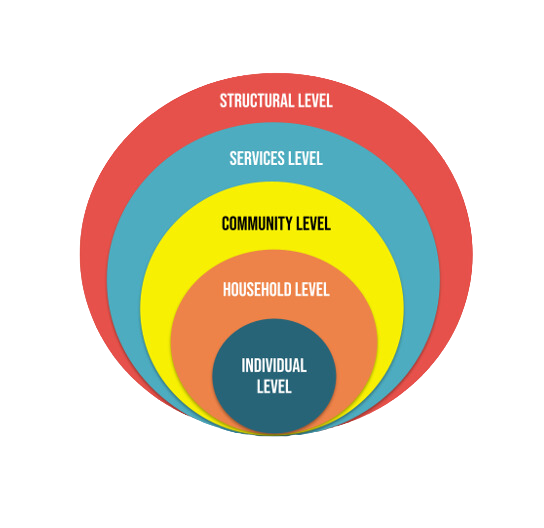
As gender practitioners, we often utilise the socio-ecological framework to conduct a gender analysis. This surfaces gender inequalities that exist at each level of society – from the individual to the structural – as well as the solutions to address these challenges. We’ve included a simple representation of this framework below, in case you’re not familiar with it!

Figure 1: the socio-ecological framework

Similarly, climate resilience can be assessed at different levels. Individuals, households, communities, service providers and governments need to be able to plan for, adapt to, and cope with climate shocks and there are a number of strategies to strengthen resilience at each level. For instance, individual-level climate resilience can be strengthened through raising awareness of climate risks, rights, and choices as well as through the building of both hard and soft skills. Soft skills programming includes initiatives to increase confidence, self-efficacy, and leadership, which can be adapted for specific populations, including adolescent girls and women.

The important takeaway here is that we don’t necessarily need to create new frameworks. Good gender analysis frameworks can be used to analyse everything from climate resilience of women fisherfolk in the blue economy, to primary health care reforms in Indonesia – we’ve adapted and applied this and other gender analysis frameworks to a whole range of varied thematic issues and contexts.

3. Women’s and girls’ agency is an important pathway to achieving climate resilience

A number of detailed frameworks illustrate the importance of agency – and women’s and girls’ empowerment more broadly – to the achievement of climate resilience. These frameworks centre women and girls in efforts to increase climate resilience. Building their confidence, knowledge, and skills enables women and girls to make more informed decisions about their livelihoods, fertility, and migration in a changing climate.

The key takeaway here is that gender equality and climate resilience are deeply connected and that efforts to increase gender equality will have an important impact on strengthening resilience. Climate resilience efforts that do not consider gender risk being less successful. Women’s and girls’ empowerment are central to climate resilience and to tackling climate change.

BACK
Jul 15, 2024

Care enterprises founded by women are transforming the care economy and lifting other women

Written by: Becky Zelikson and Kari Walton, Analysts, Kore Global

Introduction

For the past three years, Kore Global has been leading a consortium to conduct research and disseminate evidence on businesses and social enterprises that are working to recognise, reward, redistribute and reduce care work for women in Latin America, Africa, and Asia as part of the IDRC-funded Care Economy Knowledge Hub (CEKH). By care enterprises, we refer to businesses that provide a range of products and services from childcare and elder-care, to formalised domestic work, to energy-efficient cookstoves and water collection solutions. Having mapped 150 and profiled 59 such businesses, we then dove deeper into 20 enterprises to understand their business models and their impact. 

As we got to know these businesses better, we started to notice some exciting patterns – 73% of the profiled businesses had a woman founder. This is remarkable, considering that in 2023, women accounted for only 13.2% of start-up founders globally. We set out to find out what ripple effects women’s involvement in care economy business founding and leadership might have on the approach of the enterprise and its impact on other women, guided by our learnings from evaluating gender-lens impact ventures for British International Investment and for Proparco.

In 2023, British International Investment (BII), the UK’s Development Finance Institution (DFI), commissioned Kore Global to evaluate how investments made in companies and funds meeting the 2X Criteria for gender-diverse ownership (Entrepreneurship’ Criteria) and/or leadership (‘Leadership’ Criteria) have supported wider development impact for women employees, leaders, and consumers. More recently, Kore Global was engaged by Proparco, the French government’s DFI, to conduct a similar evaluation; the primary objective – in addition to assessing the overall gender-related performance of Proparco’s investment portfolio – was to better understand the potential development impact for women of investments meeting the 2X Employment Criteria (i.e., investments with a gender-diverse workforce). For both evaluations, Kore Global employed a mixed-method, theory-based approach involving desk-based review, key informant interviews, outcome marker assessment, and the development of case studies to address the research questions.

In our evaluation of BII’s gender-lens investment portfolio, we found that gender-diverse ownership and leadership in companies and funds tend to benefit women employees and contribute to stronger gender-smart business practices. Does the same hold true for care economy businesses founded and/or led with strong female involvement? This is what we found from a statistical analysis of our sample of 59 business profiles.

💡 Insight 1: Women are surpassing men in founding high-impact care economy businesses

Of the 59 businesses we profiled, 50% were solo-founded by women, and 73% had women co-founders. Comparatively, men solo-founded 27% of the businesses, and 58% of the businesses had a male co-founder. The apparent dominance of women as founders in the care economy is unprecedented and promising not only for women’s entrepreneurship but for both women employees and women consumers of those businesses. 

There is evidence to suggest that women-led firms across a variety of sectors and geographical contexts may be more likely to hiretrain, and promote women. There is also reasonable evidence to suggest that they are more likely to adopt Environmental, Social, and Governance (ESG) policies, although this evidence is mostly from high-income countries, and there is more limited evidence on how and in what ways women in leadership may contribute to the prevention of gender-based violence and harassment (GBVH) in the workplace. Evidence further suggests that women-led firms are more likely to foster female-friendly and gender-equitable workplace cultures, with effective management practices

We are beginning to better understand the mechanisms through which women business leaders may bring about positive change for other women. For example, there is some evidence suggesting female directors often prioritise kindness and fairness more than male directors, while also putting less emphasis on enforcing power hierarchies. Such attitudes are aligned with the core values underpinning gender lens investing in the care economy – providing fair wages to care workers (“Reward”), and promoting a more equitable redistribution of care work to promote women’s empowerment (“Redistribute”). 

Women founders of care businesses likely have an intimate and personal understanding of the disproportionate burden of care work on women and its negative impact on women’s labour force participation as well as career progression and involvement in leadership roles, and qualitative research with female founders supports this. It appears that more women are putting first-hand knowledge into practice by establishing enterprises that tackle the care burden head-on, strengthening the care economy ecosystem not only for their own sake but for other women, including those of lower socioeconomic class such as those employed as domestic workers or childcare providers.

💡 Insight 2: Women-founded care businesses hire and promote more women into leadership roles

If you’re concerned with women’s leadership, you need to be concerned with women’s entrepreneurship, because women-founded businesses tend to hire and promote more women. In our sample, 92% of female-founded or co-founded businesses met the 2X Leadership Criteria, i.e. the share of women in senior leadership roles exceeded 30%. In comparison, only 38% of the care businesses that were solo-founded by men met the 2X gender-diverse leadership criteria. This association between female entrepreneurship and female leadership was statistically significant (p < 0.001), suggesting this pattern is not merely a coincidence. 

While our data did not contain figures on overall female employment across the 59 care economy businesses, broader evidence suggests that gender-diverse leadership also translates into greater employment opportunities for women employees in non-leadership positions. Substantive evidence indicates that women in leadership are more likely to hire women than their male counterparts. This holds true across various geographies (especially in Central Asia and Central Eastern Europe), as well as across different sectors and types of businesses. Female-led businesses are also more likely to provide training and, with other female employees participating in that training, they can promote knowledge-building and empowerment. Further, women have better prospects to advance when employed by female-led companies. This propensity for female leaders to hire, train, and promote other women supports women’s representation in the labour market, increases their professional development, and reduces their risk of poverty or welfare dependency. These benefits also extend more broadly to households and communities, positively affecting people beyond the company. Female leaders may also act as role models for other women.

Women in leadership roles often support more gender-equitable and female-friendly cultures within their organisations. Increased female participation in the Board of Directors is associated with greater empathy and sensitivity to social and ethical issues, increased awareness of environmental risks, greater likelihood to implement environmental governance structures/processes, more engagement in corporate philanthropy and social responsibility, as well as carbon reduction initiatives. Additionally, female directors have been found to demonstrate greater benevolence and universalism than their male counterparts, and value power less (defined as the enjoyment and seeking of power derived from the control of resources and employees offered by running a business). 

Moreover, an analysis of German employer-employee data found that an increased number of women in management is related to a decreased gender pay gap for employees. Interestingly, the effect is stronger for women in second-level management positions, rather than first-level management, suggesting that the closer female managers are to their employees, the more impact on the pay gap they may have.  

While the gender pay gap may not be as relevant to care economy businesses that primarily employ women, for example as domestic workers or care providers, the quality of the jobs provided by female-founded and led companies tends to be higher, with greater remuneration and overall reward for female care workers. In our sample, 87% of the care businesses that have both a female founder and female senior leadership (>30%) had business models that met the Reward criteria in providing well-paying and secure job opportunities, as well as training and professional development opportunities to their employees. This correlation was statistically significant (p < 0.05), supporting the observations others have documented.

💡 Insight 3: Female solo founders are more likely to establish nonprofit enterprises, which in turn are more likely to work towards recognising care work.

Of the enterprises we profiled in the Care Economy Knowledge Hub, 13 were nonprofit enterprises. Of these, 9 had a female solo founder (69%). In comparison, 27.78% of for-profit enterprises were female-solo-founded, while female solo founders accounted for 67% of social enterprises. This moderate positive correlation between female solo founders and nonprofit enterprises was statistically significant (p < 0.05). 

Why might women founders be more likely to found a nonprofit than a for-profit enterprise? In addition to female leaders being more likely to prioritise the values of benevolence mentioned above, this may be related to the difficulties female entrepreneurs face in securing capital in the form of either debt or equity to grow their businesses. For instance, only 2% of global venture capital has gone to businesses solo-founded by women. In contrast, businesses with both male and female co-founders attracted 20% of venture capital. This is in part because of women’s difficulty in accessing capital overall, but also due to barriers in accessing mentorship and networks in the investing community compared to male founders. These barriers are less relevant in the context of a nonprofit seeking grant funding, which is primarily based on the enterprise’s social impact, where female leadership has a longer history of being valued, as illustrated by 62% of nonprofit CEO positions (in the US) being held by women.

Impact investors should not ignore these types of enterprises, as many are seeking to develop for-profit enterprises and/or income streams. For this, more patient and blended capital needs to be deployed. Nonprofit care economy enterprises have effective and robust business models and can provide a strong holistic impact, particularly in tackling inequities in the care economy. In our sample, there was a moderate positive and statistically significant (p < 0.01) correlation between nonprofit enterprises and working to recognise care work. Recognising care involves formalising care work and promoting the visibilisation of care work, as well as at times behavioural and normative change and advocacy. The “Recognise” pillar of the 4R framework has great potential for impact and amplification of the Reward & Redistribute pillars, as societal recognition of care work leads to greater public and private investment in the care economy ecosystem, as well as supporting normative changes whereby care work is redistributed more equitably along gender lines. So, if deep and systemic change is what you want to invest towards, nonprofits in the care economy, particularly those founded and led by women, are a very strong bet in the longer term.

Conclusion

Our Care Economy Knowledge Hub research has uncovered significant insights into the transformative potential of women-founded and women-led businesses in the care sector across Latin America, Africa, and Asia. The prevalence of female founders and leaders not only underscores their commitment to tackling the global care burden but also holds hope for their ability to establish more equitable and sustainable business practices. 

It is becoming clear that investing in women-founded care businesses not only enhances economic opportunities for women but also catalyses broader societal shifts towards recognising and valuing care work. Moving forward, these findings serve as a compelling call to action for stakeholders to prioritise and support the vital work of women entrepreneurs in reshaping the global care economy.

BACK
Jun 18, 2024

Are your survey respondents using Generative AI?

Written by: Becky Zelikson, Analyst, Kore Global and ChatGPT 4.0a

Practical tips and ethical considerations for qualitative researchers in the age of AI

The emergence of generative AI tools like ChatGPT has revolutionised various fields, including qualitative research. While these tools offer immense potential for data analysis and participant engagement, they also introduce new complexities and ethical dilemmas. A fascinating conundrum we’ve encountered is the apparent use of ChatGPT by survey respondents to generate their answers. This raises important questions about authenticity, representation, and the integrity of qualitative data. In this blog, we will explore some considerations for qualitative researchers who might want to identify AI-generated responses and handle them with care and ethical rigour.

Recognising AI-generated responses

One of the first challenges researchers face is identifying AI-generated responses. In our experience, these responses often exhibit certain tell-tale signs:

⚠️ Length and structure: AI-generated responses tend to be longer and more structured than typical human responses, often including introductory and concluding sentences and sometimes even numbered paragraphs. Itemized paragraphs produced by ChatGPT usually begin with a short title followed by a colon (just like this section of the blog!). Whereas human survey responses are often written in phrases and sentence fragments, generative AI is more likely to produce complete sentences.

⚠️ Language and grammar: These responses are usually free of typos and grammatical errors, which is uncommon in spontaneous human replies. Certain words are also overused by generative AI compared to the human population, such as the words “delve”, “tapestry”, and “embark” in the case of ChatGPT.

⚠️ Specific terminology: AI tools may use formal or precise terms, and may expand acronyms that are used in the survey question. For example, if a survey is about gender-based violence (GBV) and the survey question itself uses the acronym GBV, we would normally expect respondents to use the acronym rather than spelling out “Gender-Based Violence (GBV)”. 

While there is no conclusive way to determine whether a response is AI-generated, tools such as AI Content Detectors can provide you with a percentage likelihood that a response is AI-generated based on factors such as the above points.

Ethical considerations

Authenticity vs. accessibility

A primary concern is that AI-generated responses do not reflect the authentic voice of the respondents. However, we must also consider the inclusivity of our research. Some respondents might use AI tools to help articulate their thoughts in English if it is not their first language or if they are concerned about their fluency. Excluding these responses could inadvertently marginalise non-native speakers and those with literacy challenges. By not acknowledging the potential need for some participants to use AI assistance, we might overlook systemic inequities that affect data collection.

Transparency and integrity

Maintaining transparency about the nature of our data is crucial. If AI-generated responses are identified, this should be disclosed in the research findings. Researchers should explain how these responses were identified and the steps taken to address them. When possible, verify with respondents whether they used AI tools to assist with their responses. This can be done through follow-up questions or interviews.

Methodological adjustments

To effectively navigate the complexities introduced by AI-generated responses, consider the following methodological adjustments:

Data segmentation

Segment your data to differentiate between human-generated and AI-assisted responses. Analyse these segments separately to understand how AI might influence the themes and patterns that emerge. Compare AI-generated responses with human-generated ones to identify any significant differences in content, tone, or perspective. AI might extrapolate and exaggerate the perspective the respondent fed into it. See the example below.


Prompt to ChatGPT: “I’m answering a survey question about the impact organization Y had on me. Can you write my response for me? I essentially feel that they helped my organization get more visibility through their forum that I attended”

ChatGPT’s output: “Certainly, here’s a response for your survey: ‘Organization Y has had a significant impact on our organization by providing a valuable platform for visibility. Attending their forum enabled us to increase our visibility within the community and beyond. This exposure has been instrumental in raising awareness about our work and connecting us with like-minded individuals and organizations. We’re grateful for the opportunity to participate and for the positive impact it has had on our organization’s growth and reach.’


As you can see, the AI model infused the sentiment of gratitude, which the respondent did not express originally. ChatGPT also extrapolated that the visibility experienced by the organisation resulted in its growth. Considering such a response on par with human-generated responses bears the risk of exaggerating the impact of organisation Y.

Contextual analysis

Examine the context in which AI-generated responses appear. Look for consistency in the use of AI tools across different segments of your respondent pool. Are there particular demographics or groups more likely to use AI assistance? For instance, have respondents with AI-generated responses identified themselves as located in a non-English speaking country? Have they selected a lower level of education than the sample average? This can help you glean why respondents may have opted to submit AI-generated responses and can guide your corrective action.

Using AI to analyse AI-generated responses

Using AI for qualitative research analysis has become all the rage. It has been hailed as cost-saving and effective assuming the researcher provides a detailed enough prompt and ensures the quality of outputs. However, we have found that ChatGPT has a bias towards responses that were generated by AI. For instance, when asked to pick the best quotes from a dataset containing both human-generated and AI-generated responses, ChatGPT consistently picked AI-generated responses. It likes the sound of its own voice, essentially. This can compound the issue about exaggeration and misrepresentation of the human respondents’ voices and potentially marginalise the voices of those whose responses were grammatically incorrect or contained spelling errors due to language barriers.

To avoid this, a human eye is still necessary to read through all the qualitative data, particularly for tasks such as selecting human-generated quotes. 

If you do choose to use AI for analysis of qualitative data, ensure that participants are informed about the researcher’s intended use of AI tools and the implications this can have for their responses and privacy. Obtain explicit consent where necessary. It might also be prudent to advise participants not to use generative AI themselves. Instead, consider translating your survey into other languages (a feature which can be AI-powered in itself). 

Conclusion

As we navigate the age of AI in qualitative research, it is imperative to balance the benefits of AI tools with the need for ethical integrity and inclusivity. Recognising and addressing AI-generated responses is a step towards more transparent and equitable research practices. By doing so, we can harness the power of AI to enhance our research while honouring the authentic voices of all participants.

We encourage other researchers and practitioners to share their experiences and strategies for dealing with AI-generated responses. By collaborating and discussing these issues, we can develop robust guidelines and best practices that uphold the values of authenticity, inclusivity, and integrity in qualitative research.

BACK
Jun 13, 2024

Celebrating International Domestic Workers’ Day: Spotlight on Jazza Centre and Fair Employment Foundation

Written by: Becky Zelikson, Analyst, Kore Global

On June 16, 2024, we mark International Domestic Workers’ Day by highlighting the significant contributions of domestic workers and the transformative efforts of care economy businesses that support decent employment and professionalisation, and advance worker rights by recognising and rewarding paid domestic work. Previously, we have featured care economy businesses from Latin America, which we came to know through our care economy research over the past three years. This year, we want to share the work of care economy businesses in Africa and Asia, by shining a spotlight on Jazza Centre in Kenya and Fair Employment Foundation in Hong Kong, two care economy businesses that are leading the way in professionalising and empowering women who are domestic workers.

Jazza Centre: Empowering Domestic Workers in Kenya

In Kenya, domestic workers, predominantly women, face challenging conditions. According to the International Labour Organization (ILO), over 80% of domestic workers in most African countries work informally, without an employment contract. Many experience low wages, long working hours, and a lack of social protection as a result of this informality and precarity. Founded in 2013, Jazza Centre is a for-profit social enterprise dedicated to disrupting this status quo by training and placing domestic workers with employers and facilitating their formalisation. The organisation primarily serves vulnerable young and middle-aged women, equipping them with essential skills that cover a wide range of roles, including housekeepers, nannies, cooks, caregivers, gardeners, and office cleaners​​.

Jazza Centre’s comprehensive approach includes not only skill development but also job placement, supervision, and ongoing support. Jazza Centre share a contract template with employers, encouraging them to sign a formal contract with the domestic worker, which includes conditions such as daily/weekly rest, annual leave, minimum wage, a formal period of contract termination, a suitable work environment and enrollment in social security benefits.

Jazza Centre also offers additional benefits such as membership in a Nanny Savings and Credit Cooperative Organization (SACCO), which provides access to savings and credit to its members, further enhancing domestic workers’ financial stability and economic empowerment.

Jazza Centre has significantly impacted the lives of domestic workers, having trained nearly 7000 individuals and placed close to 5,500 in various households and enterprises. These workers benefit from timely salaries, respectful treatment, and stable working environments, which enhance their sense of security and empowerment. Many workers report positive experiences, highlighting improved relationships with employers and the ability to better support their families, including covering educational expenses for their children. Jazza Centre’s commitment to continuous improvement is evident in their regular customer satisfaction surveys and monthly feedback calls.

By improving the conditions and skillset of domestic workers, and supporting their formalisation, Jazza Centre is helping to elevate the status and rights of women workers in Kenya. Read more about Jazza Centre in their business profile here and case study here.

Fair Employment Foundation: Advocating for Migrant Domestic Workers in the Philippines

In Hong Kong, migrant domestic workers from the Philippines, Thailand and Indonesia often face significant exploitation through debt bondage and other unethical employment practices. As a result, 31% of domestic workers in Hong Kong reported that they had no choice but to stay with the same employer to repay their debt, even if they experienced abuse. 

The Fair Employment Foundation (FEF) is committed to preventing such exploitation by addressing deficiencies in the recruitment system. FEF operates an integrated set of market solutions designed to ensure fair treatment and safe working conditions for domestic workers​​. One of FEF’s core strategies is to replace the traditional, often exploitative recruitment process by providing ethical hiring solutions that prioritise the well-being and rights of workers. This includes ensuring transparent contracts and fair wages and providing support networks that protect workers from abuse and exploitation. By focusing on fair employment practices, FEF not only improves the immediate conditions of these workers but also contributes to broader gender equality. 

Through increasing awareness around bonded and forced labour and promoting behavioural compliance with good employment standards and laws, FEF contributes to greater recognition and reward of domestic labour in households and corporations. Read more about Fair Employment Foundation in their business profile here and case study here.

The Fair Employment Foundation (FEF) has made substantial strides in improving conditions for domestic workers, placing over 8,000 individuals into jobs in Hong Kong without incurring recruitment-related debt. This has saved workers an estimated US$5.8 million in placement fees. The foundation regularly checks in with workers through a welfare officer and gathers client satisfaction data two months post-deployment. FEF’s efforts have led to stable employment, as evidenced by low termination rates within three months of placement. The foundation has also influenced policy changes, such as the Philippines Consultate’s revision of employment contracts to enhance worker protections for dangerous activities. Workers placed by FEF report higher self-esteem and a greater sense of worth, attributing these improvements to debt-free job placements and supportive work environments.

Both Jazza Centre and FEF exemplify the kind of innovative, impactful work needed to uplift and protect domestic workers globally. Their efforts not only improve the immediate conditions of women workers but also contribute to broader social and economic development by recognising and valuing the essential role of domestic labour.

As we celebrate International Domestic Workers’ Day, we acknowledge the dedication of these organisations and the resilience of the workers they support. Investing in the care economy, as demonstrated by these initiatives, yields a “quadruple win” by contributing to economic growth, creating jobs, advancing gender equality, and delivering better care services. Through continued investment and advocacy, we can ensure that domestic workers, particularly marginalised women, are no longer undervalued, underpaid, and unprotected, but are recognised as vital contributors to our societies and economies. 


You can read more about Kore Global’s work as part of Transforming the Care Economy through Impact Investing page on our website, on the Care Economy Knowledge Hub, and in this blog. You can also listen to Dr Rebecca Calder and Dr Carolina Robino talking about the care economy with Natalia Bonilla on her fantastic Womanhood and International Relations podcast.

BACK
Jun 6, 2024

Empowering Girls through Participatory and Girl-Led Methods in Evaluation

Written by: Becky Zelikson from workshop materials developed by Jenny Holden, Principal Consultant; Katherine Nichol, Principal Consultant; and Becky Zelikson, Analyst, Kore Global.

Kore Global is dedicated to creating an inclusive and equitable world where the voices of marginalised groups, including girls, are not only heard but are valued and actioned. During Global Evaluation Week 2024, we would like to highlight the transformative power of participatory and girl-led methods in monitoring, evaluation, and learning (MEL), sharing some of the insights generated as part of our MEL partnership with the Obama Foundation’s Girl Opportunity Alliance. These approaches take monitoring beyond simply gathering data about participants; they put the power of knowledge generation into the hands of those most impacted. These methods can build leadership, foster deeper community engagement and ownership of projects and programmes, and support transformative impact.

The Spectrum of Girls’ Participation in MEL

Engaging girls in the MEL process can take various forms, each with distinct benefits and challenges. From minimal engagement, such as girls collecting attendance data, to highly participatory, girl-led approaches. The depth of involvement directly correlates with the potential for empowerment and quality insights.

Why Girl-Led Methods Matter

✅ Enhanced data quality and sensitivity: Girl-led methodologies, such as peer-led research, can capture nuanced and sensitive data that traditional methods often miss. Girls are more likely to share their authentic experiences with peers, resulting in richer and more accurate data.

✅ Leveraging local expertise: Involving girls in data analysis recognises them as cultural experts. Their insights help define relevant outcomes and indicators, ensuring that programmes are tailored to their specific contexts and needs.

✅ Leadership & research skill development: Participatory methods afford girls the chance to strengthen their data collection, analysis, research, leadership and presentation skills and capacities. When girls lead MEL processes, they also challenge traditional power structures, such as gender stereotypes about girls being quiet and passive, and gain confidence in their abilities to influence change.

Practical Strategies for Engaging Girls in MEL

To effectively engage girls in the MEL cycle, consider engaging girls from the outset in defining MEL questions and designing youth-friendly tools. Their involvement ensures that the evaluation process is relevant and accessible. In the data collection and analysis phase, participatory tools like photo diaries, community mapping, and storytelling can be used. These methods make the process engaging and meaningful for girls, allowing them to share their experiences creatively.

Girls can continue to stay involved by sense-making and developing recommendations. Their firsthand insights add depth to the findings and help shape actionable outcomes. Ensure that girls receive feedback on how their input is used. Engage them in presenting findings to their communities to promote transparency and demonstrate the value of their inputs.

Challenges and Mitigation Strategies

While the benefits of girl-led methods are significant, there are also challenges, including resourcing a participatory MEL process and safeguarding girls who lead and participate. 

To implement the most participatory and girl-led processes, these methods require time and resources to ensure girls are properly trained and supported throughout the process. Organisations must be prepared to invest in these areas to ensure successful implementation. 

Ethics and risk mitigation strategies in participatory and girl-led monitoring, evaluation, and learning (MEL) methods are also essential considerations to ensure the safety and well-being of girls. Key strategies include working with community gatekeepers to gain trust and access, providing support and identifying referral pathways for any issues that may arise, and ensuring that trained and supportive adult mentors are available. Digital safety training and safeguards should be implemented, especially for mobile-based data collection. It is crucial to only collect relevant data and have a clear plan for its analysis and use, ensuring data is anonymised to protect personal information. Training for adolescent girls involved in data collection on ethics and utilising a trauma-informed approach is necessary, alongside inclusive and equitable recruitment processes, so that the most marginalised girls are represented. Consent is a vital component; true and repeated consent should be sought from the girls and their parents or caregivers, and girl researchers should be trained to seek informed voluntary consent from their peers.

Conclusion

Participatory and girl-led methods are more than just data collection tools—they can be powerful drivers of empowerment and generate impactful learnings that can lead to transformational change. By placing girls at the centre of the MEL process, we not only gather richer data but also promote leadership and create more responsive and effective programs. As we celebrate Global Evaluation Week 2024, join us in committing to amplifying the voices of girls and fostering an environment where they can lead the way towards a more inclusive and equitable future.