BACK
Aug 20, 2024

Strengthening climate resilience – where does gender fit in?

Written by: Dharini Bhuvanendra, Consultant; Katherine Nichol, Principal Consultant; and Rebecca Calder, co-CEO

Women and girls are disproportionately affected by climate change-related shocks and stressors, including droughts, floods, and extreme temperature changes. The nexus between gender equality and climate resilience is an increasingly urgent consideration across all projects and initiatives. Kore Global and our partners at Population Services International (PSI) have been reflecting deeply on how to integrate a stronger climate resilience lens into our work on adolescent girls’ sexual and reproductive health and rights. Not easy or straightforward, but we have identified some bright spots and opportunities.

PSI’s Adolescents 360 (A360) is a girl-centred sexual and reproductive health intervention in Africa that focuses on increasing adolescent girls’ voluntary uptake of modern contraceptives. A360 works with adolescent girls to increase their agency in decision-making around fertility choices. A360 also advocates for the centering of girls’ agency in climate resilience initiatives, calling for the prioritisation of girls’ voices and experiences by challenging the underlying social norms that increase girls’ risk to climate shocks and by building girls’ self-efficacy in decision-making.

But what synergies exist between women’s and girls’ empowerment and climate resilience, and how are these framed by different organisations and actors working at this intersection?

While there are only a small handful of climate resilience frameworks that include gender, looking across these surfaced three relevant insights for those designing, implementing, monitoring or evaluating interventions that aim to both strengthen climate resilience and promote gender equality.

1. Climate resilience includes the capacity to address the underlying causes of vulnerability to shock and stresses, including gender inequality

Climate resilience is the ability to prepare for, withstand and recover from climate-related shocks and stresses. One framing of resilience is centred around the ‘3As’ of anticipatory, absorptive and adaptive capacity. What’s most interesting from a gender perspective is that there is another resilience capacity – transformative capacity – which is the capacity to address the underlying causes and drivers of vulnerability to shocks and stressors. These underlying drivers include discriminatory social norms, practices, institutions, and policies that contribute to inequalities and the increased vulnerability of women, girls, and marginalised groups, such as people with disabilities, people with lower incomes and those living in rural, hard-to-reach areas, to climate-related shocks. Initiatives to strengthen transformative resilience capacity therefore align with gender transformative programming, which also addresses the underlying causes of inequalities – that is, discriminatory gender norms.

The important takeaway here is that by addressing the root causes of inequality and vulnerability, people of all genders will be more able to better withstand the effects of climate change and better adapt to a changing climate.

2. Much like work on gender equality, climate resilience can be analysed and strengthened at all levels of society

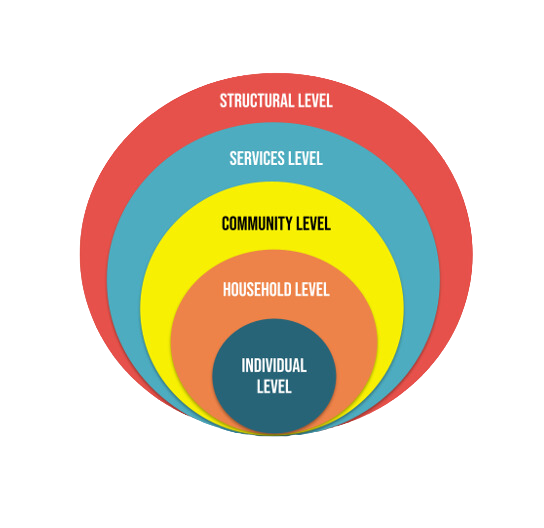
As gender practitioners, we often utilise the socio-ecological framework to conduct a gender analysis. This surfaces gender inequalities that exist at each level of society – from the individual to the structural – as well as the solutions to address these challenges. We’ve included a simple representation of this framework below, in case you’re not familiar with it!

Figure 1: the socio-ecological framework

Similarly, climate resilience can be assessed at different levels. Individuals, households, communities, service providers and governments need to be able to plan for, adapt to, and cope with climate shocks and there are a number of strategies to strengthen resilience at each level. For instance, individual-level climate resilience can be strengthened through raising awareness of climate risks, rights, and choices as well as through the building of both hard and soft skills. Soft skills programming includes initiatives to increase confidence, self-efficacy, and leadership, which can be adapted for specific populations, including adolescent girls and women.

The important takeaway here is that we don’t necessarily need to create new frameworks. Good gender analysis frameworks can be used to analyse everything from climate resilience of women fisherfolk in the blue economy, to primary health care reforms in Indonesia – we’ve adapted and applied this and other gender analysis frameworks to a whole range of varied thematic issues and contexts.

3. Women’s and girls’ agency is an important pathway to achieving climate resilience

A number of detailed frameworks illustrate the importance of agency – and women’s and girls’ empowerment more broadly – to the achievement of climate resilience. These frameworks centre women and girls in efforts to increase climate resilience. Building their confidence, knowledge, and skills enables women and girls to make more informed decisions about their livelihoods, fertility, and migration in a changing climate.

The key takeaway here is that gender equality and climate resilience are deeply connected and that efforts to increase gender equality will have an important impact on strengthening resilience. Climate resilience efforts that do not consider gender risk being less successful. Women’s and girls’ empowerment are central to climate resilience and to tackling climate change.

BACK
Jul 15, 2024

Care enterprises founded by women are transforming the care economy and lifting other women

Written by: Becky Zelikson and Kari Walton, Analysts, Kore Global

Introduction

For the past three years, Kore Global has been leading a consortium to conduct research and disseminate evidence on businesses and social enterprises that are working to recognise, reward, redistribute and reduce care work for women in Latin America, Africa, and Asia as part of the IDRC-funded Care Economy Knowledge Hub (CEKH). By care enterprises, we refer to businesses that provide a range of products and services from childcare and elder-care, to formalised domestic work, to energy-efficient cookstoves and water collection solutions. Having mapped 150 and profiled 59 such businesses, we then dove deeper into 20 enterprises to understand their business models and their impact. 

As we got to know these businesses better, we started to notice some exciting patterns – 73% of the profiled businesses had a woman founder. This is remarkable, considering that in 2023, women accounted for only 13.2% of start-up founders globally. We set out to find out what ripple effects women’s involvement in care economy business founding and leadership might have on the approach of the enterprise and its impact on other women, guided by our learnings from evaluating gender-lens impact ventures for British International Investment and for Proparco.

In 2023, British International Investment (BII), the UK’s Development Finance Institution (DFI), commissioned Kore Global to evaluate how investments made in companies and funds meeting the 2X Criteria for gender-diverse ownership (Entrepreneurship’ Criteria) and/or leadership (‘Leadership’ Criteria) have supported wider development impact for women employees, leaders, and consumers. More recently, Kore Global was engaged by Proparco, the French government’s DFI, to conduct a similar evaluation; the primary objective – in addition to assessing the overall gender-related performance of Proparco’s investment portfolio – was to better understand the potential development impact for women of investments meeting the 2X Employment Criteria (i.e., investments with a gender-diverse workforce). For both evaluations, Kore Global employed a mixed-method, theory-based approach involving desk-based review, key informant interviews, outcome marker assessment, and the development of case studies to address the research questions.

In our evaluation of BII’s gender-lens investment portfolio, we found that gender-diverse ownership and leadership in companies and funds tend to benefit women employees and contribute to stronger gender-smart business practices. Does the same hold true for care economy businesses founded and/or led with strong female involvement? This is what we found from a statistical analysis of our sample of 59 business profiles.

💡 Insight 1: Women are surpassing men in founding high-impact care economy businesses

Of the 59 businesses we profiled, 50% were solo-founded by women, and 73% had women co-founders. Comparatively, men solo-founded 27% of the businesses, and 58% of the businesses had a male co-founder. The apparent dominance of women as founders in the care economy is unprecedented and promising not only for women’s entrepreneurship but for both women employees and women consumers of those businesses. 

There is evidence to suggest that women-led firms across a variety of sectors and geographical contexts may be more likely to hiretrain, and promote women. There is also reasonable evidence to suggest that they are more likely to adopt Environmental, Social, and Governance (ESG) policies, although this evidence is mostly from high-income countries, and there is more limited evidence on how and in what ways women in leadership may contribute to the prevention of gender-based violence and harassment (GBVH) in the workplace. Evidence further suggests that women-led firms are more likely to foster female-friendly and gender-equitable workplace cultures, with effective management practices

We are beginning to better understand the mechanisms through which women business leaders may bring about positive change for other women. For example, there is some evidence suggesting female directors often prioritise kindness and fairness more than male directors, while also putting less emphasis on enforcing power hierarchies. Such attitudes are aligned with the core values underpinning gender lens investing in the care economy – providing fair wages to care workers (“Reward”), and promoting a more equitable redistribution of care work to promote women’s empowerment (“Redistribute”). 

Women founders of care businesses likely have an intimate and personal understanding of the disproportionate burden of care work on women and its negative impact on women’s labour force participation as well as career progression and involvement in leadership roles, and qualitative research with female founders supports this. It appears that more women are putting first-hand knowledge into practice by establishing enterprises that tackle the care burden head-on, strengthening the care economy ecosystem not only for their own sake but for other women, including those of lower socioeconomic class such as those employed as domestic workers or childcare providers.

💡 Insight 2: Women-founded care businesses hire and promote more women into leadership roles

If you’re concerned with women’s leadership, you need to be concerned with women’s entrepreneurship, because women-founded businesses tend to hire and promote more women. In our sample, 92% of female-founded or co-founded businesses met the 2X Leadership Criteria, i.e. the share of women in senior leadership roles exceeded 30%. In comparison, only 38% of the care businesses that were solo-founded by men met the 2X gender-diverse leadership criteria. This association between female entrepreneurship and female leadership was statistically significant (p < 0.001), suggesting this pattern is not merely a coincidence. 

While our data did not contain figures on overall female employment across the 59 care economy businesses, broader evidence suggests that gender-diverse leadership also translates into greater employment opportunities for women employees in non-leadership positions. Substantive evidence indicates that women in leadership are more likely to hire women than their male counterparts. This holds true across various geographies (especially in Central Asia and Central Eastern Europe), as well as across different sectors and types of businesses. Female-led businesses are also more likely to provide training and, with other female employees participating in that training, they can promote knowledge-building and empowerment. Further, women have better prospects to advance when employed by female-led companies. This propensity for female leaders to hire, train, and promote other women supports women’s representation in the labour market, increases their professional development, and reduces their risk of poverty or welfare dependency. These benefits also extend more broadly to households and communities, positively affecting people beyond the company. Female leaders may also act as role models for other women.

Women in leadership roles often support more gender-equitable and female-friendly cultures within their organisations. Increased female participation in the Board of Directors is associated with greater empathy and sensitivity to social and ethical issues, increased awareness of environmental risks, greater likelihood to implement environmental governance structures/processes, more engagement in corporate philanthropy and social responsibility, as well as carbon reduction initiatives. Additionally, female directors have been found to demonstrate greater benevolence and universalism than their male counterparts, and value power less (defined as the enjoyment and seeking of power derived from the control of resources and employees offered by running a business). 

Moreover, an analysis of German employer-employee data found that an increased number of women in management is related to a decreased gender pay gap for employees. Interestingly, the effect is stronger for women in second-level management positions, rather than first-level management, suggesting that the closer female managers are to their employees, the more impact on the pay gap they may have.  

While the gender pay gap may not be as relevant to care economy businesses that primarily employ women, for example as domestic workers or care providers, the quality of the jobs provided by female-founded and led companies tends to be higher, with greater remuneration and overall reward for female care workers. In our sample, 87% of the care businesses that have both a female founder and female senior leadership (>30%) had business models that met the Reward criteria in providing well-paying and secure job opportunities, as well as training and professional development opportunities to their employees. This correlation was statistically significant (p < 0.05), supporting the observations others have documented.

💡 Insight 3: Female solo founders are more likely to establish nonprofit enterprises, which in turn are more likely to work towards recognising care work.

Of the enterprises we profiled in the Care Economy Knowledge Hub, 13 were nonprofit enterprises. Of these, 9 had a female solo founder (69%). In comparison, 27.78% of for-profit enterprises were female-solo-founded, while female solo founders accounted for 67% of social enterprises. This moderate positive correlation between female solo founders and nonprofit enterprises was statistically significant (p < 0.05). 

Why might women founders be more likely to found a nonprofit than a for-profit enterprise? In addition to female leaders being more likely to prioritise the values of benevolence mentioned above, this may be related to the difficulties female entrepreneurs face in securing capital in the form of either debt or equity to grow their businesses. For instance, only 2% of global venture capital has gone to businesses solo-founded by women. In contrast, businesses with both male and female co-founders attracted 20% of venture capital. This is in part because of women’s difficulty in accessing capital overall, but also due to barriers in accessing mentorship and networks in the investing community compared to male founders. These barriers are less relevant in the context of a nonprofit seeking grant funding, which is primarily based on the enterprise’s social impact, where female leadership has a longer history of being valued, as illustrated by 62% of nonprofit CEO positions (in the US) being held by women.

Impact investors should not ignore these types of enterprises, as many are seeking to develop for-profit enterprises and/or income streams. For this, more patient and blended capital needs to be deployed. Nonprofit care economy enterprises have effective and robust business models and can provide a strong holistic impact, particularly in tackling inequities in the care economy. In our sample, there was a moderate positive and statistically significant (p < 0.01) correlation between nonprofit enterprises and working to recognise care work. Recognising care involves formalising care work and promoting the visibilisation of care work, as well as at times behavioural and normative change and advocacy. The “Recognise” pillar of the 4R framework has great potential for impact and amplification of the Reward & Redistribute pillars, as societal recognition of care work leads to greater public and private investment in the care economy ecosystem, as well as supporting normative changes whereby care work is redistributed more equitably along gender lines. So, if deep and systemic change is what you want to invest towards, nonprofits in the care economy, particularly those founded and led by women, are a very strong bet in the longer term.

Conclusion

Our Care Economy Knowledge Hub research has uncovered significant insights into the transformative potential of women-founded and women-led businesses in the care sector across Latin America, Africa, and Asia. The prevalence of female founders and leaders not only underscores their commitment to tackling the global care burden but also holds hope for their ability to establish more equitable and sustainable business practices. 

It is becoming clear that investing in women-founded care businesses not only enhances economic opportunities for women but also catalyses broader societal shifts towards recognising and valuing care work. Moving forward, these findings serve as a compelling call to action for stakeholders to prioritise and support the vital work of women entrepreneurs in reshaping the global care economy.


BACK
Jun 18, 2024

Are your survey respondents using Generative AI?

Written by: Becky Zelikson, Analyst, Kore Global and ChatGPT 4.0a

Practical tips and ethical considerations for qualitative researchers in the age of AI

The emergence of generative AI tools like ChatGPT has revolutionised various fields, including qualitative research. While these tools offer immense potential for data analysis and participant engagement, they also introduce new complexities and ethical dilemmas. A fascinating conundrum we’ve encountered is the apparent use of ChatGPT by survey respondents to generate their answers. This raises important questions about authenticity, representation, and the integrity of qualitative data. In this blog, we will explore some considerations for qualitative researchers who might want to identify AI-generated responses and handle them with care and ethical rigour.

Recognising AI-generated responses

One of the first challenges researchers face is identifying AI-generated responses. In our experience, these responses often exhibit certain tell-tale signs:

⚠️ Length and structure: AI-generated responses tend to be longer and more structured than typical human responses, often including introductory and concluding sentences and sometimes even numbered paragraphs. Itemized paragraphs produced by ChatGPT usually begin with a short title followed by a colon (just like this section of the blog!). Whereas human survey responses are often written in phrases and sentence fragments, generative AI is more likely to produce complete sentences.

⚠️ Language and grammar: These responses are usually free of typos and grammatical errors, which is uncommon in spontaneous human replies. Certain words are also overused by generative AI compared to the human population, such as the words “delve”, “tapestry”, and “embark” in the case of ChatGPT.

⚠️ Specific terminology: AI tools may use formal or precise terms, and may expand acronyms that are used in the survey question. For example, if a survey is about gender-based violence (GBV) and the survey question itself uses the acronym GBV, we would normally expect respondents to use the acronym rather than spelling out “Gender-Based Violence (GBV)”. 

While there is no conclusive way to determine whether a response is AI-generated, tools such as AI Content Detectors can provide you with a percentage likelihood that a response is AI-generated based on factors such as the above points.

Ethical considerations

Authenticity vs. accessibility

A primary concern is that AI-generated responses do not reflect the authentic voice of the respondents. However, we must also consider the inclusivity of our research. Some respondents might use AI tools to help articulate their thoughts in English if it is not their first language or if they are concerned about their fluency. Excluding these responses could inadvertently marginalise non-native speakers and those with literacy challenges. By not acknowledging the potential need for some participants to use AI assistance, we might overlook systemic inequities that affect data collection.

Transparency and integrity

Maintaining transparency about the nature of our data is crucial. If AI-generated responses are identified, this should be disclosed in the research findings. Researchers should explain how these responses were identified and the steps taken to address them. When possible, verify with respondents whether they used AI tools to assist with their responses. This can be done through follow-up questions or interviews.

Methodological adjustments

To effectively navigate the complexities introduced by AI-generated responses, consider the following methodological adjustments:

Data segmentation

Segment your data to differentiate between human-generated and AI-assisted responses. Analyse these segments separately to understand how AI might influence the themes and patterns that emerge. Compare AI-generated responses with human-generated ones to identify any significant differences in content, tone, or perspective. AI might extrapolate and exaggerate the perspective the respondent fed into it. See the example below.


Prompt to ChatGPT: “I’m answering a survey question about the impact organization Y had on me. Can you write my response for me? I essentially feel that they helped my organization get more visibility through their forum that I attended”

ChatGPT’s output: “Certainly, here’s a response for your survey: ‘Organization Y has had a significant impact on our organization by providing a valuable platform for visibility. Attending their forum enabled us to increase our visibility within the community and beyond. This exposure has been instrumental in raising awareness about our work and connecting us with like-minded individuals and organizations. We’re grateful for the opportunity to participate and for the positive impact it has had on our organization’s growth and reach.’


As you can see, the AI model infused the sentiment of gratitude, which the respondent did not express originally. ChatGPT also extrapolated that the visibility experienced by the organisation resulted in its growth. Considering such a response on par with human-generated responses bears the risk of exaggerating the impact of organisation Y.

Contextual analysis

Examine the context in which AI-generated responses appear. Look for consistency in the use of AI tools across different segments of your respondent pool. Are there particular demographics or groups more likely to use AI assistance? For instance, have respondents with AI-generated responses identified themselves as located in a non-English speaking country? Have they selected a lower level of education than the sample average? This can help you glean why respondents may have opted to submit AI-generated responses and can guide your corrective action.

Using AI to analyse AI-generated responses

Using AI for qualitative research analysis has become all the rage. It has been hailed as cost-saving and effective assuming the researcher provides a detailed enough prompt and ensures the quality of outputs. However, we have found that ChatGPT has a bias towards responses that were generated by AI. For instance, when asked to pick the best quotes from a dataset containing both human-generated and AI-generated responses, ChatGPT consistently picked AI-generated responses. It likes the sound of its own voice, essentially. This can compound the issue about exaggeration and misrepresentation of the human respondents’ voices and potentially marginalise the voices of those whose responses were grammatically incorrect or contained spelling errors due to language barriers.

To avoid this, a human eye is still necessary to read through all the qualitative data, particularly for tasks such as selecting human-generated quotes. 

If you do choose to use AI for analysis of qualitative data, ensure that participants are informed about the researcher’s intended use of AI tools and the implications this can have for their responses and privacy. Obtain explicit consent where necessary. It might also be prudent to advise participants not to use generative AI themselves. Instead, consider translating your survey into other languages (a feature which can be AI-powered in itself). 

Conclusion

As we navigate the age of AI in qualitative research, it is imperative to balance the benefits of AI tools with the need for ethical integrity and inclusivity. Recognising and addressing AI-generated responses is a step towards more transparent and equitable research practices. By doing so, we can harness the power of AI to enhance our research while honouring the authentic voices of all participants.

We encourage other researchers and practitioners to share their experiences and strategies for dealing with AI-generated responses. By collaborating and discussing these issues, we can develop robust guidelines and best practices that uphold the values of authenticity, inclusivity, and integrity in qualitative research.

BACK
Jun 13, 2024

Celebrating International Domestic Workers’ Day: Spotlight on Jazza Centre and Fair Employment Foundation

Written by: Becky Zelikson, Analyst, Kore Global

On June 16, 2024, we mark International Domestic Workers’ Day by highlighting the significant contributions of domestic workers and the transformative efforts of care economy businesses that support decent employment and professionalisation, and advance worker rights by recognising and rewarding paid domestic work. Previously, we have featured care economy businesses from Latin America, which we came to know through our care economy research over the past three years. This year, we want to share the work of care economy businesses in Africa and Asia, by shining a spotlight on Jazza Centre in Kenya and Fair Employment Foundation in Hong Kong, two care economy businesses that are leading the way in professionalising and empowering women who are domestic workers.

Jazza Centre: Empowering Domestic Workers in Kenya

In Kenya, domestic workers, predominantly women, face challenging conditions. According to the International Labour Organization (ILO), over 80% of domestic workers in most African countries work informally, without an employment contract. Many experience low wages, long working hours, and a lack of social protection as a result of this informality and precarity. Founded in 2013, Jazza Centre is a for-profit social enterprise dedicated to disrupting this status quo by training and placing domestic workers with employers and facilitating their formalisation. The organisation primarily serves vulnerable young and middle-aged women, equipping them with essential skills that cover a wide range of roles, including housekeepers, nannies, cooks, caregivers, gardeners, and office cleaners​​.

Jazza Centre’s comprehensive approach includes not only skill development but also job placement, supervision, and ongoing support. Jazza Centre share a contract template with employers, encouraging them to sign a formal contract with the domestic worker, which includes conditions such as daily/weekly rest, annual leave, minimum wage, a formal period of contract termination, a suitable work environment and enrollment in social security benefits.

Jazza Centre also offers additional benefits such as membership in a Nanny Savings and Credit Cooperative Organization (SACCO), which provides access to savings and credit to its members, further enhancing domestic workers’ financial stability and economic empowerment.

Jazza Centre has significantly impacted the lives of domestic workers, having trained nearly 7000 individuals and placed close to 5,500 in various households and enterprises. These workers benefit from timely salaries, respectful treatment, and stable working environments, which enhance their sense of security and empowerment. Many workers report positive experiences, highlighting improved relationships with employers and the ability to better support their families, including covering educational expenses for their children. Jazza Centre’s commitment to continuous improvement is evident in their regular customer satisfaction surveys and monthly feedback calls.

By improving the conditions and skillset of domestic workers, and supporting their formalisation, Jazza Centre is helping to elevate the status and rights of women workers in Kenya. Read more about Jazza Centre in their business profile here and case study here.

Fair Employment Foundation: Advocating for Migrant Domestic Workers in the Philippines

In Hong Kong, migrant domestic workers from the Philippines, Thailand and Indonesia often face significant exploitation through debt bondage and other unethical employment practices. As a result, 31% of domestic workers in Hong Kong reported that they had no choice but to stay with the same employer to repay their debt, even if they experienced abuse. 

The Fair Employment Foundation (FEF) is committed to preventing such exploitation by addressing deficiencies in the recruitment system. FEF operates an integrated set of market solutions designed to ensure fair treatment and safe working conditions for domestic workers​​. One of FEF’s core strategies is to replace the traditional, often exploitative recruitment process by providing ethical hiring solutions that prioritise the well-being and rights of workers. This includes ensuring transparent contracts and fair wages and providing support networks that protect workers from abuse and exploitation. By focusing on fair employment practices, FEF not only improves the immediate conditions of these workers but also contributes to broader gender equality. 

Through increasing awareness around bonded and forced labour and promoting behavioural compliance with good employment standards and laws, FEF contributes to greater recognition and reward of domestic labour in households and corporations. Read more about Fair Employment Foundation in their business profile here and case study here.

The Fair Employment Foundation (FEF) has made substantial strides in improving conditions for domestic workers, placing over 8,000 individuals into jobs in Hong Kong without incurring recruitment-related debt. This has saved workers an estimated US$5.8 million in placement fees. The foundation regularly checks in with workers through a welfare officer and gathers client satisfaction data two months post-deployment. FEF’s efforts have led to stable employment, as evidenced by low termination rates within three months of placement. The foundation has also influenced policy changes, such as the Philippines Consultate’s revision of employment contracts to enhance worker protections for dangerous activities. Workers placed by FEF report higher self-esteem and a greater sense of worth, attributing these improvements to debt-free job placements and supportive work environments.

Both Jazza Centre and FEF exemplify the kind of innovative, impactful work needed to uplift and protect domestic workers globally. Their efforts not only improve the immediate conditions of women workers but also contribute to broader social and economic development by recognising and valuing the essential role of domestic labour.

As we celebrate International Domestic Workers’ Day, we acknowledge the dedication of these organisations and the resilience of the workers they support. Investing in the care economy, as demonstrated by these initiatives, yields a “quadruple win” by contributing to economic growth, creating jobs, advancing gender equality, and delivering better care services. Through continued investment and advocacy, we can ensure that domestic workers, particularly marginalised women, are no longer undervalued, underpaid, and unprotected, but are recognised as vital contributors to our societies and economies. 


You can read more about Kore Global’s work as part of Transforming the Care Economy through Impact Investing page on our website, on the Care Economy Knowledge Hub, and in this blog. You can also listen to Dr Rebecca Calder and Dr Carolina Robino talking about the care economy with Natalia Bonilla on her fantastic Womanhood and International Relations podcast.

BACK
Jun 6, 2024

Empowering Girls through Participatory and Girl-Led Methods in Evaluation

Written by: Becky Zelikson from workshop materials developed by Jenny Holden, Principal Consultant; Katherine Nichol, Principal Consultant; and Becky Zelikson, Analyst, Kore Global.

Kore Global is dedicated to creating an inclusive and equitable world where the voices of marginalised groups, including girls, are not only heard but are valued and actioned. During Global Evaluation Week 2024, we would like to highlight the transformative power of participatory and girl-led methods in monitoring, evaluation, and learning (MEL), sharing some of the insights generated as part of our MEL partnership with the Obama Foundation’s Girl Opportunity Alliance. These approaches take monitoring beyond simply gathering data about participants; they put the power of knowledge generation into the hands of those most impacted. These methods can build leadership, foster deeper community engagement and ownership of projects and programmes, and support transformative impact.

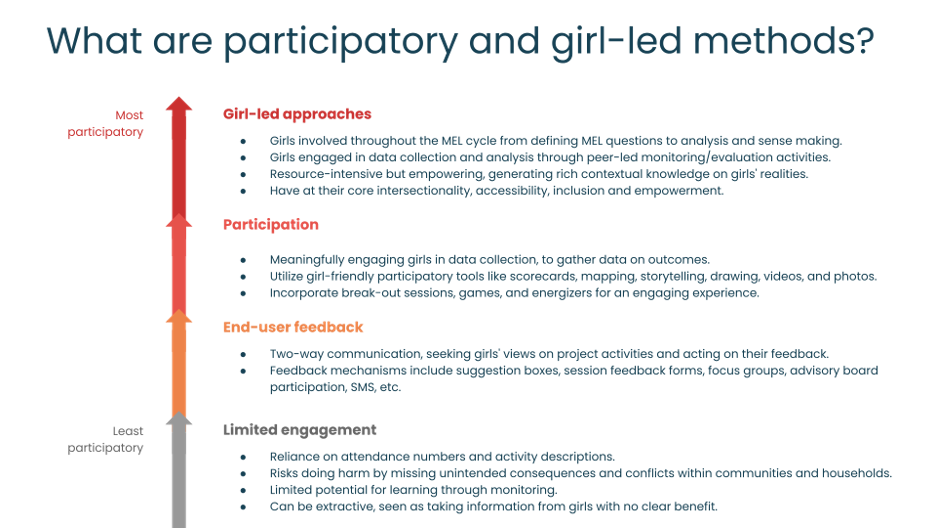
The Spectrum of Girls’ Participation in MEL

Engaging girls in the MEL process can take various forms, each with distinct benefits and challenges. From minimal engagement, such as girls collecting attendance data, to highly participatory, girl-led approaches. The depth of involvement directly correlates with the potential for empowerment and quality insights.

Why Girl-Led Methods Matter

✅ Enhanced data quality and sensitivity: Girl-led methodologies, such as peer-led research, can capture nuanced and sensitive data that traditional methods often miss. Girls are more likely to share their authentic experiences with peers, resulting in richer and more accurate data.

✅ Leveraging local expertise: Involving girls in data analysis recognises them as cultural experts. Their insights help define relevant outcomes and indicators, ensuring that programmes are tailored to their specific contexts and needs.

✅ Leadership & research skill development: Participatory methods afford girls the chance to strengthen their data collection, analysis, research, leadership and presentation skills and capacities. When girls lead MEL processes, they also challenge traditional power structures, such as gender stereotypes about girls being quiet and passive, and gain confidence in their abilities to influence change.

Practical Strategies for Engaging Girls in MEL

To effectively engage girls in the MEL cycle, consider engaging girls from the outset in defining MEL questions and designing youth-friendly tools. Their involvement ensures that the evaluation process is relevant and accessible. In the data collection and analysis phase, participatory tools like photo diaries, community mapping, and storytelling can be used. These methods make the process engaging and meaningful for girls, allowing them to share their experiences creatively.

Girls can continue to stay involved by sense-making and developing recommendations. Their firsthand insights add depth to the findings and help shape actionable outcomes. Ensure that girls receive feedback on how their input is used. Engage them in presenting findings to their communities to promote transparency and demonstrate the value of their inputs.

Challenges and Mitigation Strategies

While the benefits of girl-led methods are significant, there are also challenges, including resourcing a participatory MEL process and safeguarding girls who lead and participate. 

To implement the most participatory and girl-led processes, these methods require time and resources to ensure girls are properly trained and supported throughout the process. Organisations must be prepared to invest in these areas to ensure successful implementation. 

Ethics and risk mitigation strategies in participatory and girl-led monitoring, evaluation, and learning (MEL) methods are also essential considerations to ensure the safety and well-being of girls. Key strategies include working with community gatekeepers to gain trust and access, providing support and identifying referral pathways for any issues that may arise, and ensuring that trained and supportive adult mentors are available. Digital safety training and safeguards should be implemented, especially for mobile-based data collection. It is crucial to only collect relevant data and have a clear plan for its analysis and use, ensuring data is anonymised to protect personal information. Training for adolescent girls involved in data collection on ethics and utilising a trauma-informed approach is necessary, alongside inclusive and equitable recruitment processes, so that the most marginalised girls are represented. Consent is a vital component; true and repeated consent should be sought from the girls and their parents or caregivers, and girl researchers should be trained to seek informed voluntary consent from their peers.

Conclusion

Participatory and girl-led methods are more than just data collection tools—they can be powerful drivers of empowerment and generate impactful learnings that can lead to transformational change. By placing girls at the centre of the MEL process, we not only gather richer data but also promote leadership and create more responsive and effective programs. As we celebrate Global Evaluation Week 2024, join us in committing to amplifying the voices of girls and fostering an environment where they can lead the way towards a more inclusive and equitable future.

BACK
Apr 30, 2024

Why men should care about gender equality

Written by: Kari Walton, Analyst, Kore Global

As Sexual Assault Awareness Month (April) comes to an end, the topic of gender-based violence and sexual assault remains relevant and important year-round. Survivors of sexual assault represent all demographics; however, to best understand this issue, we must acknowledge that women and girls are disproportionately affected by sexual violence, making gender an important part of the conversation. 

Discussions about gender-based inequalities often importantly centre on the challenges faced by women and gender minorities. At the same time, it’s important to recognize the integral role that men play in advancing gender equality, and how their involvement can benefit not only women, but all people, including men.

Here are 4 reasons why men should care about gender equality:

1. Improve personal health and well-being

While women (and gender minorities) have historically borne the brunt of gender inequalities, men also face unique challenges stemming from societal expectations and gender norms. For example, men’s health and well-being are influenced by social constructs of masculinity, which often discourage behaviours like help-seeking and emotional vulnerability. Instead, these norms drive men and boys to present as strong, competitive, and in control – a standard that is both unrealistic and detrimental to maintain. Indeed, the suicide rate among men is 2-4 times that of women, and they fare more poorly on indices of substance misuse, risk-taking-related injury, violence, and aggression. By embracing gender equality, men can liberate themselves from restrictive norms, enabling greater personal growth, authenticity, and fulfillment. This helps to reduce the cost to men  – including poor health, shallow relationships, and risk of early death – of conforming to traditional masculine ideals.

2. Enhance relationship satisfaction

Egalitarian relationships, characterized by shared responsibilities and mutual respect, are associated with higher levels of satisfaction and well-being for both partners. For example, research indicates that when men share housework and childcare responsibilities with their partner, both they and their partners are less likely to be diagnosed with depression, in therapy, or taking medication, and report higher levels of relationship satisfaction. Additionally, men who share these responsibilities tend to engage in better personal health habits (e.g., less drinking, smoking, drug use, and more routine medical check ups). By challenging traditional gender roles and embracing equitable practices, men can cultivate deeper connections with their partners and foster a supportive environment conducive to relationship fulfillment.

3. Support work-life balance and child development

Meaningful involvement in caregiving and household responsibilities is essential for fostering healthy family dynamics and work-life balance. When men actively participate in childcare and domestic tasks, it not only strengthens their relationships with their children but also allows for greater flexibility and support within the family unit. This balance benefits both men and women, enabling them to pursue their professional aspirations while maintaining fulfilling personal lives. Moreover, children thrive in environments where caregiving responsibilities are shared equitably between parents. When fathers actively participate in childcare and household tasks, it positively impacts children’s cognitive development, emotional well-being, and overall success. By prioritizing active fatherhood, men contribute to the holistic development of future generations and set positive examples for gender-equitable parenting.

4. Create inclusive communities and workplaces

Gender equality extends beyond individual relationships to encompass broader societal structures and institutions. Companies that prioritize diversity and inclusion reap numerous benefits, including enhanced creativity, productivity, and employee satisfaction. Further, gender-equitable companies demonstrate lower levels of attrition and have an easier time recruiting employees. By championing gender equality in the workplace and beyond, men contribute to the creation of happier, more inclusive communities for all. 

Advancing gender equality is a shared goal — one that benefits individuals, families, workplaces, and communities alike. By amplifying diverse voices, challenging harmful stereotypes, and advocating for inclusive policies and practices, we can create a more just and equitable world for everyone.

BACK
Apr 2, 2024

Investment in gender-diverse ownership and leadership drives development impact for women

Written by: Becky Zelikson, Kari Walton, Jenny Holden, and Rebecca Calder, Kore Global.

This year, as we continue to celebrate the International Women’s Day’s theme of ‘Invest in Women: Accelerate Progress’, we are delighted to share new evidence on how investing in companies and funds with gender-diverse ownership and/or leadership can support development impact for women. For the past nine months, Kore Global has been collaborating with British International Investment (BII), the development finance institution of the UK government, to evaluate the extent to which its investments in companies and funds which meet the 2X Criteria for gender-diverse ownership (‘Entrepreneurship’ Criteria) and/or leadership (‘Leadership’ Criteria) have supported wider development impact for women.

The evaluation is timely. It builds on learnings from the first phase of 2X (2018-2021) and responds to the high demand to improve transparency, accountability, and credibility in the field of gender-lens investing. As BII publishes the report from this evaluation, we wanted to take this opportunity to share some of our evaluation team’s reflections and takeaways.

Women employees benefit when the leadership & ownership structures are gender-diverse

We found that BII’s investments in companies with gender-diverse ownership and/or leadership tended to adopt gender-smart business practices that promote inclusive work environments – in particular, gender-smart recruitment and retention strategies. For example, in traditionally male-dominated sectors, clear succession planning and tackling gender biases in recruitment coupled with targeted recruitment efforts can address gender imbalances in leadership, and enhanced parental leave and flexible or hybrid working arrangements were reported to facilitate more family-friendly workplace cultures. 

These practices are enabled by conducive organisational cultures, which promote women’s leadership and sustain diversity in the workplace. Of the companies assessed, those with the strongest evidence of supporting improved economic welfare, well-being and/or empowerment of women employees are those who demonstrate a genuine commitment to gender diversity at all levels, coupled with a deliberate focus on addressing gender-specific barriers to women’s employment and participation.

We could not assess whether gender-smart business practices were associated with higher remuneration for women due to the lack of such data collection by businesses. Along with greater support for women employees and gender-equitable policies, we encourage businesses and investors to invest in data-driven approaches that can enable gender pay gap analysis and other useful metrics of gender-equitable employment. Measurement not only supports the evaluation of outcomes but can also help ensure that commitments and policies are translated into practice. 

Funds with gender-diverse ownership and/or leadership have a more intentional approach to gender 

The evaluation included seven funds that met the 2X Entrepreneurship and/or Leadership Criteria, all of which showed commitment to integrating gender considerations within their investing strategies. Indeed, five of the seven funds (71%) were found to be on track to exceed 50% of their investments meeting at least one 2X criterion.

The funds demonstrating the strongest evidence of supporting impact for women were those with an explicit and intentional gender-lens investing strategy. Such investing strategies articulate the fund’s approach to identifying 2X-eligible investments as well as to creating gender-related impact by working with their portfolio companies post-investment to adopt gender-smart business practices and meet additional 2X Criteria. Particularly invaluable to amplifying impact was having personnel in-house with time and specialised knowledge to provide ongoing support to portfolio companies.

Financial institutions are leading the way in adopting gender-smart practices to address the needs of their women customer segment

The evaluation sample included four companies that met the 2X Entrepreneurship and/or Leadership Criteria that deliver products and services directly to end customers. All four had adopted gender-smart business solutions to address women’s needs, with the three financial institutions (FIs) in the sample demonstrating high standards in gender-smart business practices. These FIs went beyond simply collecting sex-disaggregated data on their customers and used gender-related data to inform the refinement of existing product or service offerings to better meet the needs of women customers.

Both gender-diverse ownership and leadership, coupled with other enabling factors, maximise the adoption of gender-smart business practices

To fully reap the benefits of women’s leadership, women’s broad representation across both senior management and governance structures, in conjunction with women’s ownership, was shown to be the most effective combination for the adoption of gender-smart business practices with the greatest potential to bring about development impact for women. 

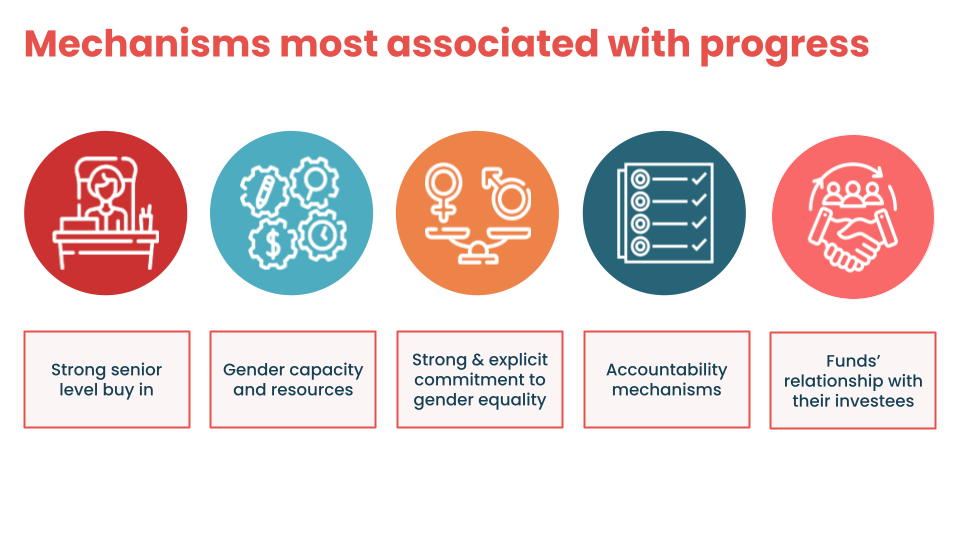
In addition to women’s representation, company-level factors (see image below), such as strong senior-level buy-in, gender capacity, commitments, accountability mechanisms, and relationships with portfolio companies were more indicative of gender-smart practice adoption than geographic context. This means that while geographic context should be considered when contemplating gender-lens investments, other factors can be just as influential in determining the potential development impact of an investment. 

Factors most associated with the adoption of gender-smart practices

So what now? 

If you are interested in further details about the methodology behind this evaluation, including the Theory of Change we developed, or more information on our key findings and recommendations, you can access the report from this evaluation here.

BACK
Mar 7, 2024

Not your average gender 101 training: Tips for delivering impactful GESI capacity strengthening

Written by: Written by Becky Zelikson, Analyst, Kore Global.

Actors in the international development sector are increasingly vocal about the mismatch between their organisational needs and the effectiveness of existing approaches to gender equality and social inclusion (GESI) capacity strengthening. GESI training is often too long, too theoretical and too disconnected from their day-to-day work. 

At Kore Global, we have been trying something different. Through our support to a diverse group of partners – ranging from philanthropic foundations such as the Barack Obama Foundation, impact investors such as Grand Challenges Canada, and nonprofits such as Right to Play and PSI –  we have been testing, adapting and iterating new, more effective approaches to GESI capacity strengthening. Following recent conversations with partners who found our support valuable  – and enjoyable! – we are sharing five key tips.

1. Embed GESI training into ongoing organisational processes 

No one wants to sit through a generic Gender 101 training that feels disconnected from their daily work responsibilities. GESI should not be a standalone process. Rather, it should be integrated into what is already happening in an organisation to ensure it is useful and does not overburden people. We recommend delivering applied approaches, marrying gender theory with the reality of existing organizational priorities and constraints. For example, one of our clients requested a training series to build staff knowledge and competencies on gender equality. Rather than delivering training on the basic concepts related to gender equality, we developed an applied training module using an existing grant-making tool that all staff were familiar with as an entry point to discuss gender equality. This enabled us to explore foundational concepts of gender equality in a way that conveyed their immediate relevance and utility. Ultimately, this approach tied theoretical concepts to staff members’ day-to-day responsibilities.

We also recommend identifying ongoing activities – such as staff meetings, learning sessions or strategy reviews – as opportunities to weave in content on gender equality as a valuable addition to facilitating standalone GESI activities. 

2. Recognise participants as experts 

GESI work is personal. It involves discussions of power dynamics that may be uncomfortable, but also deeply relevant and potentially transformative. We have learned that it is particularly effective to ground sessions in the personal, creating safe spaces to reflect on experience – and bias. 

In addition to participants’ lived experience, we also encourage them to bring their professional selves to GESI training spaces. To ensure training approaches are deeply contextualised to the realities of a particular organisation –  and job – we treat participants as experts. Training sessions that provide a platform for participants to debate, reflect on and contribute content result in learning approaches that are more targeted, effective, and useful for participants’ day-to-day jobs. 

We recently employed this approach to capacity-strengthening and peer learning through our support to Grand Challenges Canada (GCC)’s Community of Practice on Gender Equality which brings together GCC innovators through quarterly learning sessions. Several innovators were invited to present their approaches to conducting gender analysis and creating a gender-equitable organisational culture to their peer organisations. Some of these organisations are small and new to GESI work, so would not normally be featured as “experts”. However, the concrete and applied examples they were able to share were particularly powerful, encouraging lively discussion and reflection among participants. We have found that some of the best learning occurs not when participants are learning from the facilitator, but when we create a curated space for participants to listen, be heard, and learn from each other.

3. Bring the joy factor 

Learning should be enjoyable. There is robust scientific evidence that learning is more effective when it is fun and that this is generally true for workplace learning as well. In an effort to overcome webinar fatigue, we have identified a suite of online interactive tools to make training sessions interactive and engaging. Some of our go-to digital tools include Slido, Mentimeter and Mural. More important though than using fun digital tools is to ensure opportunities for hands-on learning, such as through case studies, breakout sessions and brainstorming discussions. Central to this is enabling participants to connect in a setting that promotes creative collaboration. 

As part of our engagement as the Monitoring, Evaluation and Learning (MEL) partner to the Obama Foundation’s Girls Opportunity Alliance (GOA), we recently delivered a particularly interactive and fun-filled virtual learning sprint. The learning sprint brought together a diverse group of grassroots leaders in girls’ education and empowerment with varying degrees of MEL knowledge. We were presented with a challenge – to bring together a diverse group of individuals who don’t know each other and need to deliver on bold learning goals in a short amount of time (and virtually!). To respond to this challenge, we rolled out our favourite virtual collaboration tools including i) Slido timed quizzes to enable participants to apply what they learned and get instant feedback and ii) facilitated breakout rooms where participants were able to work through case studies custom-tailored to their field of work.

4. Promote ongoing learning 

We have moved away from a “one and done” approach to gender training. Alternatively, we recommend promoting ongoing learning opportunities throughout the annual cycle. After initial training sessions, enable participants to have time to sit with their new knowledge and skills, before coming back together for follow-on sessions where they can celebrate progress and flag ‘sticky’ areas in need of creative solutions. Consider rolling out mentoring and coaching sessions where participants can receive targeted support as they apply new skills to their day-to-day jobs. 

For us, our partnership with Grand Challenges Canada (GCC) is a prime example of ongoing learning. The relationship and trust built with GCC staff and innovators over several years has enabled us to identify key GESI capacity-strengthening opportunities and offer webinars, training sessions, or other types of tools and guidance notes that respond to past successes and internal priorities.

5. Invest in building capacity to build GESI capacity

Building the GESI muscles of an organisation is critical to ensuring GESI becomes part of everyday ‘ways of working’. An effective strategy is the development of a gender champion or gender focal point system. Working with individuals who are already embedded within organisations and have a rich understanding of local contexts increases the likelihood that GESI work is both fit-for-purpose and sustainable. We think it is important to work ourselves out of a job, by building the capacity of staff, particularly local staff, to drive GESI change. 

Kore Global has used this approach in our ongoing support to Population Services International’s (PSI) Adolescent 360. We have developed a comprehensive coaching, mentorship and capacity development program for a diverse global team, that has included a phased approach to the transition of GESI capacity and leadership to local GESI specialists. 

We are committed to trying and testing new approaches. In the spirit of fostering a community of GESI learning, we invite others to share their tips for effective GESI training.

BACK
Feb 1, 2024

Moving beyond talk: A new knowledge brief for practitioners on the ‘how’ of integrating economic empowerment and sexual and reproductive health programs for adolescent girls

Written by: Meghan Cutherell (A360), Dharini Bhuvanendra (Kore Global) and Katherine Nichol (Kore Global)

For the past two years, Kore Global has provided ongoing gender technical advisory services to Population Services International’s Adolescents 360 (A360) program, a girl-centered contraceptive program in sub-Saharan Africa. To address the multiple, intersecting challenges girls face, A360 added an economic empowerment component to its existing program model which had previously focused solely on sexual and reproductive health (SRH). This process highlighted an important gap in the sector – the lack of programmatic guidance on how to meaningfully integrate economic empowerment and SRH interventions in adolescent girls’ programs. 

In an effort to fill this knowledge gap, A360 and Kore Global have developed a knowledge brief to equip practitioners with the practical tools, guidance and resources to effectively and meaningfully design integrated programs. Grounded in case studies, the brief outlines a series of promising practices to move the needle on delivering integrated programs for girls. Top tips for practitioners are highlighted below. 

1. Design curricula that focus on a foundational set of soft skills known for contributing to both economic empowerment and SRH outcomes

A foundational set of soft skills is a critical starting point for the design of holistic programs. Building adolescent girls’ core soft skills – which can include negotiation and problem-solving skills, as well as competency to manage stress and emotions – can enable girls to better navigate challenging situations in both their personal and professional lives. An excellent example of this approach is BRAC’s Empowerment and Livelihood for Adolescents (ELA) program in Uganda, which provided a bundled package of both hard and soft skills training, including management skills, leadership, negotiation and conflict resolution. An evaluation of the program found that the development of soft skills was important in achieving key program outcomes. Program participants were more engaged in income-generating activities and less likely to have a child when they were not ready, compared to the control group.

2. Utilize group-based program models to provide the wraparound support necessary to achieve both economic empowerment and SRH outcomes

All of the programs analyzed during the review operate using a group-based approach, ranging from girls’ clubs to savings and loans groups. Practitioners have used group-based approaches for decades, creating a safe space for delivering content on multiple topics, including economic empowerment and SRH, resulting in a truly integrated program model. Some practitioners strategically leverage this by promoting topics that are particularly attractive to adolescent girls, such as savings and earning money, as an entry point for discussing more challenging (and sometimes less interesting) topics such as access to contraceptives. For instance, the Action for Slum Dwellers’ Reproductive Health Allahabad program in India made access to the popular livelihoods training component of the program conditional on regular attendance at SRH sessions. In addition, groups have been proven to build social capital by fostering supportive networks that contribute to success across various life domains. 

3. Center girls’ voices, experience and leadership

A large body of evidence demonstrates that successful adolescent girl programs are built on an understanding of girls’ needs. Given the complexity of economic empowerment and SRH programming, it is vital to understand where girls are starting from and what they need to set them up for success. Girls should ideally be involved in all stages of the program cycle, from design, through to implementation and monitoring and evaluation. The A360 program utilized a human-centered design (HCD) process to integrate economic empowerment interventions within its existing SRH program, meaningfully engaging adolescent girls and other key stakeholders, including mothers and husbands, in testing the program and adapting the final program design according to the evidence base. 

4. Take a lifecycle approach

A lifecycle approach takes account of the evolving capacities and interests of girls at different stages of adolescence. In both economic empowerment and SRH programming, certain interventions have been proven to be more or less effective and appropriate depending on the target age group. For instance, basic financial literacy skills are important for early adolescents, whereas vocational training and other employment-focused initiatives are better suited to older girls. Similarly, program designers should carefully consider what kinds of SRH information are appropriate and useful for different age groups, in terms of their capacity to make informed decisions about their reproductive health. One program that takes a lifecycle approach is the 12+ in Rwanda, which was developed for early adolescent girls aged 10-14, who are typically more open to both risk-taking and influence from peers and other social networks. The program has developed a highly targeted, age-appropriate curriculum that is particularly relevant for the realities of early adolescent girls in Rwanda. 

5. Identify and actively engage key influencers 

The context in which girls live, their key relationships and the social norms influencing their lives, play a significant role in contributing to achieving economic empowerment and SRH outcomes. Engaging with influential stakeholders, including parents, intimate partners, and community leaders, is essential to gaining support for girls’ economic and SRH goals and aspirations. One intervention that effectively engaged key influencers is CARE’s IMAGINE program, which mobilized the entire community to support the program’s primary objective of delaying first birth by working closely with adolescent girls’ collectives, young men’s social clubs as well as community management committees. IMAGINE’s endline evaluation found significantly higher rates of contraceptive use, greater health service utilization, and participation in income-generating activities among the adolescent girl participants compared to the control group. 

These tips serve as a starting point for effective integrated programming for girls. For a deeper understanding, take a look at the full knowledge brief, offering a wealth of additional resources and tips!