Moving from Principles to Practice: A User-Focused Resource for Applying Social Equity and Gender Equality in Investment
Written by: Laura Groggel (Kore Global) & Kate Gatto (Realize Capital Partners)
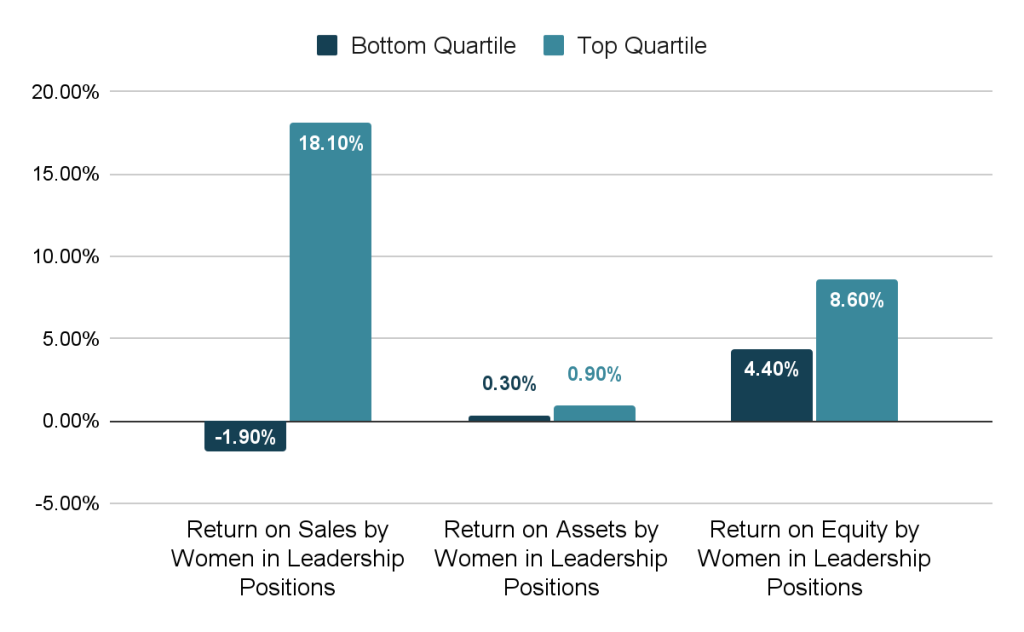
Integrating social equity and gender equality into investment practice is not just the right thing to do – it’s good for business. There is a large body of evidence that backs this up. Across 15 studies over two decades, companies with gender-diverse executive teams were 25% more likely to achieve above-average profitability compared to peers (McKinsey & Company, 2020). A portfolio analysis of Calvert Impact Capital’s investments in 160 businesses globally found that companies in the top quartile for women in leadership outperformed bottom-quartile peers on returns on sales (18.1% vs. -1.9%), returns on assets (3.9% vs. 0.3%), and returns on equity (8.6% vs. 4.4%).
The case for racial equity is equally compelling. Companies that proactively hire racially and ethnically diverse staff are 35% more profitable than those that don’t (World Economic Forum, 2023). Despite the current political climate, which in many cases is leading investors and other market actors to shift away from strategy that centres social equity and gender equality, the evidence shows that these actions actively limit productivity, creativity and innovation – with real economic consequences.
Organizations that adopt strong practices across the dimensions of social equity and gender equality tend to build more resilient governance structures, develop more market-responsive products and attract a broader range of mission-aligned capital. Yet despite this, and despite stated intentions – genuine in many cases – many practitioners working in impact investing, social finance, philanthropy, and social purpose still find it difficult to translate social equity and gender equality principles into policies and day-to-day practices that shape organizational culture. This has material impacts on positive social outcomes and business results.
The question isn’t whether equity matters. It’s how to do the work consistently and authentically in a way that holds up under scrutiny and doesn’t revert to compliance checkbox exercises.
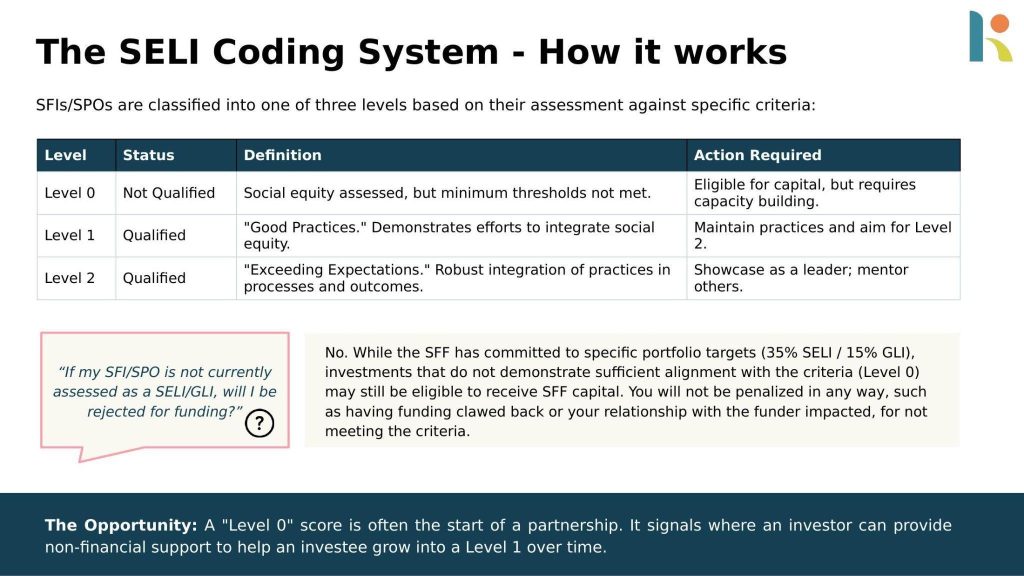
This is what the Pilot Social Equity Lens Investment (SELI) Coding System is designed to address. Developed as part of Canada’s Social Finance Fund (SFF) by the Government of Canada, SELI is Canada’s national framework for social equity and gender lens investing. Building on established global frameworks like the 2X Criteria, it functions simultaneously as an assessment tool and a roadmap. As an assessment, it gives actors across the capital chain – wholesalers, Social Finance Intermediaries (SFIs), and Social Purpose Organizations (SPOs) – a structured way to classify investments as Social Equity Lens Investments or Gender Lens Investments based on established criteria across themes such as portfolio alignment, leadership, and organizational culture. As a roadmap, it helps organizations track their own progress over time – not just where they are today – and offers pathways for them to deepen their practices to realize the actual value that intentional equity-focused practice offers.
Ultimately, these practices are not abstract: They shape who has access to capital, who is represented in leadership, and the profile of economic opportunity in Canada.
To support people to apply the framework, we have developed the SELI Learning Module – a practical capacity-building resource designed to build clearer understanding of how the SELI Coding System can be interpreted and applied in real investment and reporting contexts.
The SELI Learning Module introduces the SELI Coding System and demonstrates how it can be applied across investment and reporting processes. It was designed primarily for SFIs and SPOs with investment in the SFF, but the underlying questions it tackles – how to assess and advance social equity and gender equality practices with rigor and consistency, how to think about evidence and intentionality, how to support organizations at different stages – are relevant well beyond the SFF. It is our hope that practitioners in impact investing, social finance, philanthropy, and social purpose broadly will find SELI and this learning module useful and we encourage you to apply the flexible framework in your context.
In 2026, Social Finance Fund investees reported to Realize Capital Partners and our fellow wholesalers, and we reported to the Government of Canada using the SELI Coding System for the first time. We appreciate the accountability to social equity and gender equality that the tool promotes, and the opportunity it creates for deepening practice. The work Kore Global is leading will support SFIs and SPOs to apply SELI as both an assessment and reporting tool, and to strengthen their practices through a responsive, context-specific approach. We are excited about this partnership and look forward to supporting this important work.
[Caption: A slide from the SELI Learning Module]
Across social finance, there is increasing pressure to demonstrate economic reconciliation with Indigenous communities and progress towards outcomes related to equity and justice for those who continue to be structurally excluded from access to capital, including Black and other racialized communities, and gender-diverse people. This pressure is well-founded. Despite a growing body of compelling evidence, capital deployed with a social equity and gender lens still represents a small fraction of total investment globally, and the gap between stated commitments and measurable action remains wide.
This gap persists in part due to a lack of practical tools to act. Research across the sector consistently finds that even investors persuaded by the business case often lack the frameworks and support needed to move from intention to consistent practice. Deeply rooted systemic biases and structural barriers, resistance to changing established processes that reproduce inequitable outcomes, and the absence of sector-specific, contextualized data all slow adoption. Closing this gap requires intentional, sustained effort from actors across the capital chain.
Over the next year, we plan to release additional resources and to host conversations online and at conferences and events about applying the SELI Coding System in practice with people doing the work. Join us on June 9 for a conversation about integrating community voice in investment decision-making. The webinar will be designed around one SELI theme with practical examples and moderated discussion with panelists about how participatory approaches can be embedded across governance, due diligence, and capital allocation, and how these practices support stronger gender equality and social equity outcomes.
Capital doesn’t deliver gender outcomes, institutions do: Lessons from an ex-post evaluation of a gender TA initiative in Jordan
Written by: Jenny Holden, Principal Consultant - Kore Global, Katie Turner, Associate - Kore Global, Tamara Abdel-Jaber, Associate - Kore Global, and Kristin Duchateau, Gender Focal Point - OeEB
Gender-focused technical assistance (TA) is increasingly recognised as essential to expanding women’s access to finance — yet it remains underutilised across much of the investment landscape. While capital commitments to gender-lens investing continue to grow globally, this progress is uneven across regions. In the Middle East and North Africa (MENA), for example, the venture capital ecosystem remains highly exclusionary: women-only founding teams receive just ~1–2% of total VC funding, despite broader growth in startup investment. This persistent gap reflects not only capital constraints but deeper structural barriers within investment ecosystems — including bias in investment decision-making, limited networks, and weak institutional capacity to identify and support women-led businesses. As a result, comparatively less attention is paid to the institutional capabilities that determine whether financial institutions can effectively serve women entrepreneurs — reinforcing regional disparities and limiting the impact of capital alone.
This is not simply a question of resources. It is also a question of strategy and design. Without a clearer understanding of what makes gender TA work, and how it can drive institutional change, investors risk overlooking one of the most powerful levers for translating gender ambition into operational reality.
In 2025, Oesterreichische Entwicklungsbank (OeEB), the Development Bank of Austria, partnered with Kore Global to undertake an independent ex-post evaluation of a gender-focused TA initiative delivered with Sanadcom for business finance (Sanadcom), a Jordanian SME lender, in collaboration with Women’s World Banking. The evaluation was commissioned by OeEB to assess the effectiveness of the gender TA on Sanadcom’s performance as well as to generate strategic learning to inform OeEB’s future gender TA and advisory support.
The findings offer practical insight into how gender TA can move financial institutions from gender intention to integration — and why design choices matter as much as delivery.
Moving from gender ambition to institutional practice
Sanadcom operates in Jordan’s “missing middle,” financing micro, small, and medium enterprises (MSMEs) that are too large for microfinance yet frequently underserved by commercial banks. Women entrepreneurs face additional structural barriers, including limited collateral ownership and persistent perceptions of higher credit risk.
Rather than launching a standalone product for women, the TA initiative focused on strengthening the institution itself. Credit policies were revised, gender considerations embedded into risk assessment and client engagement, staff capacity strengthened through integrated training, IT systems upgraded to support sex-disaggregated reporting, and incentives aligned with expanding outreach to women entrepreneurs. The emphasis was on institutional strengthening to position Sanadcom as a leader in gender finance and better positioned to meet the needs of women-led MSMEs.
Evidence that technical assistance can drive institutional change
The evaluation found that these institutional changes translated into measurable results. Women’s share of Sanadcom’s portfolio increased from 6.4% in 2020 to 9.9% in 2022, before stabilising at approximately 8.6% in 2025 amid broader economic volatility— marking meaningful progress in reaching a historically underserved segment despite contextual challenges.
Portfolio performance told an even stronger story. Portfolio at Risk (PAR) for women declined from 36.3% in 2020 to just 6% by 2024, ultimately outperforming the male borrower portfolio. This finding challenges persistent assumptions about the risk profile of women-owned enterprises and suggests that gender-responsive lending can strengthen credit outcomes.
Operationally, the TA introduced greater consistency in credit decision-making, streamlined processes, and strengthened Sanadcom’s reputation with investors and ecosystem actors.
The evaluation also documented internal cultural shifts: Sanadcom appointed its first female CEO and achieved near gender parity across its workforce — notable progress in a sector where women remain underrepresented in leadership.
Effective TA, the findings suggest, can reshape how FIs function — not simply what they offer.
Five design choices for meaningful technical assistance delivery
While contexts differ, the evaluation surfaced several features that appear particularly influential in determining whether gender TA leads to lasting institutional change.
Ground the intervention in institutional reality. The initiative began with a detailed diagnostic of Sanadcom’s operations, identifying gaps in credit processes, staff capacity, and gender integration. Anchoring the TA in operational priorities — rather than applying a pre-defined TA design — strengthened relevance and fostered internal ownership.
Embed gender into core business functions. Gender was integrated across Sanadcom’s credit policies, risk frameworks, training, and client engagement instead of being treated as a parallel workstream. Positioning gender responsiveness as part of institutional systems increased the likelihood that practices would endure beyond the project.
Align incentives with strategic objectives. Introducing higher employee bonuses for acquiring and retaining women clients linked staff performance directly to institutional gender goals. This alignment proved critical in translating policy into everyday behavior.
Invest in systems alongside skills. Training was reinforced by upgrades to Sanadcom’s IT infrastructure that enabled gender-disaggregated data collection and more systematic reporting. Institutional change rarely results from knowledge alone; it is sustained when policies, processes, and data systems support new ways of operating.
Secure leadership commitment early. Engagement from Sanadcom’s senior management helped embed gender priorities within strategic decision-making and contributed to broader organizational shifts, including progress toward gender diversity in leadership. Where leadership alignment is strong, TA is far more likely to catalyse durable transformation.
Taken together, these lessons highlight how TA is most effective when treated as a strategic instrument for institutional strengthening rather than a set of discrete support activities.
Strengthening institutions to accelerate impact
As development finance institutions sharpen their focus on additionality and long-term impact, thoughtfully designed TA is becoming increasingly central.
The Sanadcom evaluation underscores how capital alone does not deliver gender outcomes — institutions do. Policies, incentives, systems, and leadership ultimately determine whether financial institutions can serve women entrepreneurs effectively and sustainably.
For Sanadcom, the results have been transformative. As Rana Hamdan, CEO of Sanadcom, explains:
“Our mission at Sanadcom is to bridge the financing gap for underserved MSMEs, particularly women-led businesses. This initiative has strengthened our ability to deliver tailored, inclusive financial solutions that empower women entrepreneurs to grow, create jobs, and contribute meaningfully to Jordan’s economy. In addition, Gender-focused technical assistance has been a turning point for Sanadcom. It enabled us to move beyond ambition and embed gender responsiveness into our core operations — from credit policies to client engagement — strengthening our ability to serve women-led MSMEs in a more sustainable and impactful way.”
For OeEB, the evaluation provides actionable insight into how gender TA can deepen the impact of its investments. For the wider investor community, it reinforces the importance of approaching gender TA not as a nice-to-have offering, but as a strategic lever for institutional change.
At Kore Global, we partner with investors, financial institutions, and foundations to design and deliver technical assistance, research and evaluations that strengthen systems, build institutional capacity, and advance gender and development outcomes.
Sustainable agriculture requires sustainable care: Insights from roundtables with Ecuadorian agribusinesses
Written by: Becky Zelikson and Rebecca Calder
When Kore Global and IDB Invest convened leaders from Ecuador’s flower, banana, vegetable, and shrimp sectors in Quito and Guayaquil to discuss care in their agribusinesses, the conversation moved quickly beyond policy compliance. What emerged was a frank reckoning with a challenge hiding in plain sight: the invisible weight of unpaid care work is quietly undermining the productivity, stability, and competitiveness of Ecuadorian agribusiness — and the companies that have started to take this challenge seriously are already seeing measurable returns.
The sessions brought together a diverse group of agribusiness representatives to explore how care responsibilities — childcare, elder care, and support for family members with disabilities — affect workers and operations alike. The headline finding was unambiguous: care is not a peripheral social issue. It is a material business risk. And treating it as one is the difference between a company that struggles with chronic absenteeism and turnover, and one that reduces staff attrition.
Women are essential to agribusinesses, but unpaid care work constrains them
In Ecuador, women spend 52.4 hours per week on unpaid care and domestic work, compared to just 13.72 hours for men. These are not just statistics — they are a structural drag on workforce participation, and agribusinesses absorb the cost whether or not they track it.
Women make up more than half the workforce in crops such as flowers, coffee, fruits, and vegetables, prized for their precision and reliability in labour-intensive tasks, including harvesting, selection, and packaging. Yet, as roundtable participants described, the care responsibilities that await them at home each evening significantly challenge their well-being, making consistent, full employment difficult to sustain.
The testimony from the banana sector was particularly vivid. Female workers frequently begin shifts at dawn or work into the night, returning home to find their children already asleep, unable to help with homework or simply be present. In the shrimp and packing industries, many women are single mothers with no safe or affordable childcare alternative. Participants described mothers monitoring their young children via mobile phone cameras while on the production floor — a makeshift solution that speaks to the scale of the gap between workers’ needs and available support.
“These mothers… leave their young children alone… the [women working in the packing facility] have very limited resources, and you know what they invest in? They invest in cameras. They leave cameras set up [at home and] are monitoring them from their cell phones… little ones of 7 or 9 years old are left alone, exposed.” (Roundtable participant)
Cultural pressures compound the challenge. In some rural communities efforts to improve women’s financial independence are met with resistance at home — what participants called “husband backlash” — meaning that progress made inside the workplace can be undone the moment a woman returns to a domestic environment that has not shifted alongside her. As one participant observed, workshops on empowerment can leave women feeling motivated, only for them to arrive home to a household where the decision-making structure and unpaid care work distribution make none of it applicable. The implication for businesses is significant: workplace care initiatives work best when they are connected to broader community and cultural change.
The operational impact of care: What the data shows
Absenteeism figures from companies at the roundtable revealed a pronounced gender split: while about 70% of male absenteeism is linked to accidents from sport or hobbies, 70% of female absenteeism is attributable to caring for family members. Despite this observation of the impact of care needs on absenteeism, most companies represented at the roundtables acknowledged they do not yet have consolidated caregiver data. Absenteeism is tracked; the reasons are often recorded, but the cross-referencing of absence data with care responsibilities rarely happens. As one participant put it, senior management frequently resists care initiatives precisely because they cannot see the link between an employee’s childcare crisis and a productivity dip two days later. The data exists in different parts of the organisation — it simply hasn’t been integrated.
This is starting to change. One company represented at the roundtable described plans to add a dedicated caregiver identification field to its SAP onboarding system, allowing it to build, for the first time, a structured picture of which employees have care responsibilities. Critically, this initiative was estimated to cost almost nothing beyond staff time. The barrier to gathering this information is rarely financial — it is organisational will and the know-how to ask the right questions sensitively.
Relatedly, participants emphasised that care-related questions can feel invasive, particularly when they come from HR or talent departments, where employees may fear the information will affect their performance evaluations. Several companies had found that routing these conversations through social welfare workers — who are seen as supportive rather than evaluative — produced far better results. The angle of approach matters as much as the question itself.
What works: Organisational care practices that deliver results
The roundtables were not merely a catalogue of problems. Participants shared concrete initiatives that have produced tangible results — and the outcomes are compelling.
Coupon Book of Hours (Cuponera de Horas). One dairy product company introduced what it calls a “coupon book” of flexible time: operational staff receive eight hours per month to use for personal and family needs, taken in coordination with their direct supervisor. The effect has been a significant reduction in unannounced absences and last-minute no-shows — disruptions that are disproportionately costly in time-sensitive agricultural operations such as harvesting and packing. Crucially, the scheme also generated reciprocity: when production pressures required staff to extend shifts or cover additional hours, employees were far more willing to do so, having already received flexibility in return. Reception among staff was strongly positive, with the benefit rated as meaningful even though it is non-monetary.
Expanding women workers into higher-value field roles. In the banana industry, one company identified desoje (leaf stripping) — a field task historically performed only by men — as suitable for women. The work carries no safety risk and requires no heavy equipment. By opening this role to women, the company achieved two things simultaneously: women were able to earn higher piece-rate wages, and — because the task can be completed by early afternoon — they gained time to be at home with their children. What began as a gender equity initiative delivered a care outcome without any additional cost to the business.
Turnover transformed. One frozen fruit company described reducing staff turnover from 11% to 0.36% over eighteen months — an outcome attributed to a sustained package of care-related benefits, welfare investment, and engagement. At a company with thousands of employees, the recruitment, onboarding, and productivity costs associated with that level of turnover reduction are substantial.
Why companies are struggling to go further
Despite these successes, care integration across the sector remains nascent. Participants identified a range of barriers that help explain the slow pace of change.
The most fundamental challenge identified was cultural. Senior management often resists care initiatives because they are not seen as within a business’s professional remit. Care is perceived as a private family matter. One participant noted that they had encountered directors who, when presented with proposals for childcare support, responded simply: “These are not my children. Why should I worry about their daycare?” Without C-suite ownership, care programmes stagnate as isolated HR experiments rather than becoming embedded in operational strategy.
Regulatory ambiguity makes matters worse. Ecuador legally requires daycares for companies with more than 100 employees, but the regulation is sufficiently unclear — and the infrastructure sufficiently complex to establish — that some companies have simply calculated whether the fine is cheaper than compliance, and opted to pay it. This is not cynicism; it reflects genuine obstacles. Agricultural environments present real safety risks: exposure to chemicals and heavy machinery makes safe on-site childcare provision complex to implement. One company described trying to formalise a public-private partnership with municipal childcare centres, only for the initiative to stall on a legal technicality around financial transfers to public entities.
Geographic dispersion adds another layer of complexity. For companies with operations across dozens of remote centres, the logistics and cost of delivering consistent care support are prohibitive for a single business. What is affordable and scalable in a city becomes a significant challenge when workers travel from multiple dispersed communities.
Finally, the sector faces a broader structural challenge that makes retention ever more urgent: a generational labour shortage. The migration of younger workers away from agricultural employment has left a workforce with an average age above 45. Keeping experienced people is becoming increasingly critical — and care support, as the turnover data shows, is one of the most effective tools available.
What investors and multilateral banks can do
For individual company initiatives to scale into sector-wide change, roundtable participants were clear that impact investors and multilateral lenders need to become active partners — not just in financing, but in building the case and lowering the cost of adoption. Several concrete ideas emerged from the discussions.
A “Care Seal” or corporate recognition programme linked to preferential credit access would create a direct financial incentive for adoption. If companies that implement formal care strategies qualify for better borrowing terms from multilateral lenders, care becomes not just ethically desirable but commercially rational. Participants observed that the “Fear of Missing Out” effect is a great motivator: once peer companies are seen pursuing a certification or seal, others follow — not out of conviction, but out of competitive instinct. That dynamic can be harnessed.
Technical assistance to build measurement capability is equally important. Many companies lack the tools to demonstrate the return on investment of care initiatives to their own boards. Supporting investees to build impact management and measurement frameworks — ones that explicitly cross-reference care provision with productivity and retention data — would both build the evidence base and shift leadership attitudes. The companies at the roundtable that had managed to win management support had done so with data: a diagnosis, an impact matrix, measurable outcomes. The pathway to board buy-in runs through numbers.
Better data collection guidance is a more modest but practical ask. Participants noted that surveys on care burdens can feel intrusive if poorly designed, causing workers — particularly those in agricultural supply chains — to withhold information or disengage. Guidance on how to ask questions that uncover genuine needs without generating suspicion or raising unfulfillable expectations would help companies gather the data they need to act.
Public-private infrastructure partnerships are needed for viable care solutions. For small-scale producers and rural communities, the capital cost of childcare infrastructure is prohibitive for any single company. Facilitating partnerships between businesses, local government, and community organisations to build shared external childcare infrastructure would distribute the cost and reduce individual liability — making care investment viable beyond the largest agribusinesses.
The bottom line
The roundtables in Quito and Guayaquil produced a finding that should reframe how the agribusiness sector thinks about care: this is not philanthropy. Companies that have invested in flexible time schemes, community health alliances, and expanded roles for women are not reporting social outcomes alongside their financial results — they are reporting them as their financial results. Turnover at near-zero. Workers who stay for decades. Communities that protect the business during a national strike.
Care initiatives work when they are integrated into core management models rather than bolted on as social responsibility afterthoughts. The evidence from Ecuador is clear: when employees feel their care needs are supported, their sense of belonging and productivity increase — and the business benefits follow.
The question for agribusinesses — and for the investors who back them — is no longer whether there is a business case for investing in care, but rather how to do so in a viable, impactful, context-specific, and sustainable way.
No Just Transition Without Care: The Missing Infrastructure in Climate Finance
Written by: Becky Zelikson, Rebecca Calder, Jenny Holden (Kore Global) and Ella Duffy (Donor Committee for Enterprise Development)
The “just transition” has become one of the most widely used phrases in climate policy — and one of the most contested. In theory, it promises that the shift away from fossil fuels will be managed fairly, leaving no worker or community behind. In practice, debates continue to rage about whose work counts, whose risks are factored in, and whose labour gets to be called “green.” We have been grappling with these questions as part of our research for the Donor Committee for Enterprise Development (DCED) on care, climate, and private sector development. A recent piece by Jessica Espinoza (CEO of 2X Global) argues that a transition that concentrates capital in the same hands as before is not “just” — it is merely low-carbon. We agree. Yet even in the most gender-smart climate finance conversations, something foundational is still missing from the frame: how investing in the care economy is essential to ensuring a just transition.
The word that keeps getting left out
Women’s central roles in areas such as community resilience, water systems, and energy access are increasingly recognised in gender and climate discussions. These are all critical. But there is an overarching category that cuts across each of these areas, but that rarely appears in climate finance discourse: care. This includes the paid and unpaid labour of raising children, supporting elderly relatives, nursing the sick, securing water and food, and sustaining households when climate shocks compromise livelihoods and social support systems.
This is not a semantic point. When care is not named, it is not seen – and when it is not seen, it is not funded. The result is that the very infrastructure holding climate-vulnerable communities together – care – remains systematically invisible to capital allocators, while the women providing that infrastructure are left absorbing shock after shock, with little investment in their capacity to do so.
The climate crisis is also a care crisis
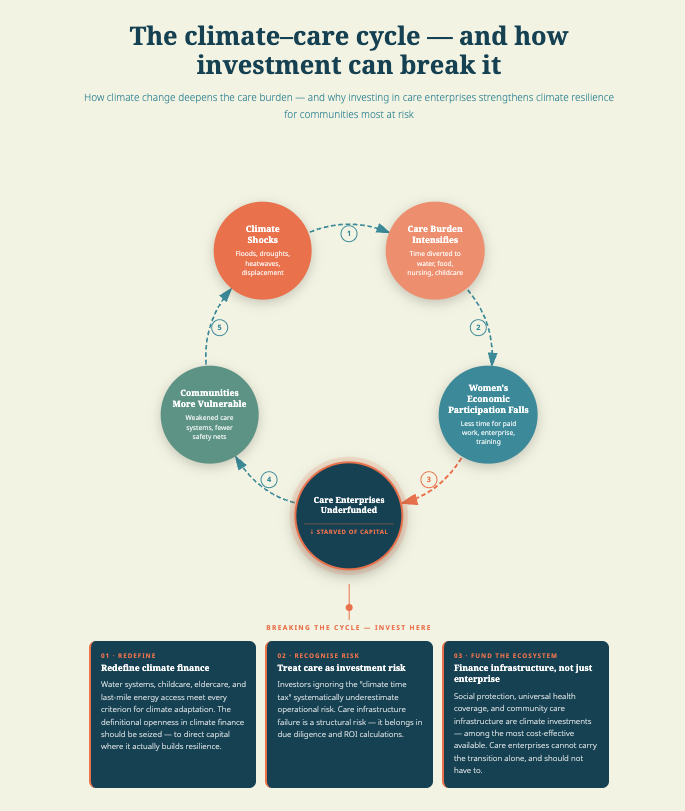
The relationship between climate change and care is not incidental. It is structural. As our DCED research shows, climate-related shocks — e.g. heatwaves, floods, droughts, displacement — do not simply disrupt economies in the aggregate. They also increase the volume and intensity of unpaid care work, and they do so along already-unequal gendered lines.
When water sources dry up, women walk further to fetch water. When floods destroy and disrupt essential infrastructure, women care for those who are sick and displaced. When heatwaves send children and elderly relatives into health crises, women are the first responders — often without compensation, recognition, or the option to stop. Globally, women already perform more than three-quarters of all unpaid care work (ILO, 2022). Climate change is rapidly intensifying that burden.
This is what researchers have begun calling the “climate time tax” (Ngunjiri et al., 2025) — the additional hours climate shocks extract from women’s days. These are hours that cannot simultaneously be invested in a business, a training programme, or a green job. It is one of the most direct mechanisms by which climate change reinforces gender inequality, yet care remains almost entirely absent from just transition frameworks.
For an interactive version of the above image, click here.
What counts as climate finance and who gets left out
The exclusion of care from climate finance is neither accidental nor is it surprising. It is the predictable outcome of defining “climate finance” in ways that reflect whose labour has historically been counted — and whose has not.
Today, climate capital flows overwhelmingly towards mitigation: technology, hardware, energy infrastructure, and transport systems. These are sectors with familiar venture capital trajectories, legible to investors shaped by a particular model of what “bankable” looks like. Adaptation and resilience, by contrast, are chronically underfunded. Current adaptation finance flows to low and middle-income countries (approx. $28 billion in 2022) are 12 to 14 times smaller than the actual annual need. And within adaptation, anything that looks like care — because it is relational, local, context-specific, and disproportionately carried out by women — is treated as social expenditure rather than economic infrastructure, and is therefore dismissed as insufficiently “investable” within most prevailing finance models, including climate finance. And when investors fail to price care infrastructure into their models, this is not just an ethical oversight — they are systematically underestimating operational risk, particularly in climate-exposed geographies where women’s labour underpins the enterprises they fund.
The lack of an agreed-upon definition of what counts as ‘climate finance’ compounds this challenge. There is no internationally agreed standard for what counts as climate finance (Shishlov and Censkowsky 2022). In the absence of such a standard, estimates of progress towards global climate commitments vary wildly. In practice, existing development finance is often partially or fully reclassified as climate finance (even when climate objectives were not central to design) or climate indicators are simply layered into existing investments.
But the fact that the definition of climate finance is open to interpretation can be seen as either a problem to be solved or an opportunity to be seized — and we think it is the latter. If climate finance has no fixed borders, then the argument for expanding those borders to include care infrastructure becomes not just legitimate but urgent. Financing water access, childcare, eldercare, community health systems, and clean energy for last-mile communities meets any serious definition of climate adaptation. The question is whether we are willing to say so, and to design incentive structures that follow that logic rather than defaulting to what already attracts capital.
Care jobs are green jobs
Advocates in the just transition space have rightly challenged the narrow focus on protecting workers in carbon-intensive industries — e.g. coal miners and oil workers, etc. — as the central concern of a fair transition. This framing – however understandable politically – defaults to a masculinised vision of “work” and overlooks the millions of women already doing low-carbon, community-sustaining labour every single day.
Care jobs are, by definition, green jobs (ILO, 2024). They produce, on average, 26 times fewer greenhouse gas emissions than manufacturing jobs, and 1,500 times fewer than jobs in the fossil fuel sector (DCED 2025). The ILO estimates that investment in care could create nearly 300 million jobs globally by 2035 — the majority held by women and in formal employment. These are not aspirational figures. This capacity already exists, in the hands of women who are currently doing this work without adequate pay, protection, or investment.
A just transition that ignores care infrastructure is not just incomplete. It is actively reinforcing the inequalities it claims to redress by continuing to treat women’s care labour as an infinite, free resource that the transition can lean on without reciprocating.
Insights from enterprises at the forefront of the gendered care-climate nexus
Our research for the DCED included direct conversations with women-led enterprises at the intersection of care and climate — and what we found was a picture of genuine innovation operating under conditions of persistent underinvestment.
In Kenya, AgeWatch Africa Foundation provides professional eldercare to vulnerable older persons in Nairobi and northern Kenya, deploying predominantly female caregivers through both a care centre and home-based services. When climate shocks hit — and in Kenya they hit with increasing severity — AgeWatch does not retreat. During the 2024 flooding season alone, the organisation supported over 1,200 households. To protect its caregivers from the compounding burden of serving high-need clients whilst managing their own household emergencies, AgeWatch introduced a job-sharing model: standard shifts were reduced and redistributed so that caregivers could manage both professional and personal responsibilities without burning out. The result was stronger staff retention, more consistent care for elderly clients, and an enterprise model that treated its workforce’s additional unpaid care realities as an operational given rather than an inconvenient exception. The organisation has also developed a detailed proposal for a solar-powered community borehole that would provide year-round water security to the care centre and surrounding community — a project with obvious multiplier effects for the community, including towards climate resilience, reducing women’s unpaid labour, and elder wellbeing. Despite shopping the proposal to multiple funders, they have not secured support at the time of writing. This is precisely the kind of climate resilience investment that should be attracting capital.
In the remote islands of East Nusa Tenggara, Indonesia, Komodo Water builds solar-powered water infrastructure for last-mile communities where water collection has always been designated women’s work. When their systems reduced a six-hour water journey to ten minutes, women in the community expressed enormous relief. “They never thought it would happen,” founder Shana Fatina told us. This is what care infrastructure, properly funded and designed, actually looks like in practice. It sits at the precise intersection of climate adaptation and reduction in unpaid domestic care work that climate finance consistently fails to reach.
In Kenya, Tanzania, and Nigeria, Solar Sister distributes clean energy products, such as solar lights and clean energy cookstoves, through women entrepreneurs in rural communities. These products reduce rural women’s time spent on unpaid care work, such as collecting fuel, as well as reducing the need to care for children with respiratory illnesses through a reduction in indoor air pollution. During erratic rainy seasons, many of Solar Sister’s women entrepreneurs — who are also smallholder farmers — are forced to divert their entire attention and capital towards protecting harvests, setting their enterprises aside entirely. The “conflicting attention” their programme lead describes is not a personal failing. It is the climate time tax playing out at the enterprise level, in real time, with real income consequences. Solar Sister, a woman-led enterprise that is fully embedded in the contexts in which it operates, understands this and is working with the women entrepreneurs they support to devise solutions to address this challenge and enable them to continue earning a living all year round, while supporting women in their communities to access clean energy products.
These examples illustrate that care enterprises are not peripheral actors in the just transition. They are its frontline. They are reducing carbon emissions, enabling women’s economic participation, delivering climate adaptation, and absorbing the care deficits that climate change keeps generating. And they are chronically, structurally underfunded.
One of the best ways that climate finance can be gender-smart is to be care-smart
In recent years, a growing coalition of institutions — including the UNFCCC through its Belém Gender Action Plan, the 2X Climate Finance Taskforce (powered by the EIB, EBRD, and others), and the World Bank and IFC — have called for “gender-smart” climate finance, and have argued that investments that overlook gender are missing both impact and risk.
But gender-smart approaches, as currently practised, focus overwhelmingly on women’s representation in governance and ownership — important but insufficient metrics. A care-smart approach demands something more. It requires investors to ask not just who leads this enterprise, but what happens to care when this investment lands? E.g. Does it reduce women’s unpaid care burden or increase it? Does it recognise care workers as climate-relevant economic actors? Does it invest in the social infrastructure — childcare, eldercare, health coverage, social protection — without which women-led enterprises cannot function, let alone scale?
There are a number of toolkits focused on gender-smart climate finance, including recent work Kore Global has been leading in partnership with Truvalu and SDC. For those looking to go a step further and seeking guidance on investing at the care-climate nexus, our Care-Climate-Gender Rubric, developed in partnership with IDRC, goes further: it provides indicators specifically designed to measure how investments deliver care-climate impact for women workers, women consumers, and women engaged in supply chains. The goal is to make the care-climate nexus legible to investors — because what can be measured is more likely to be financed.
We are not alone in making this argument
The Just Transition and Care (JTC) Network — an international network of scholars, union representatives, women’s organisations, and environmental justice activists — has been arguing that caregivers, care infrastructure, and social protection must be recognised as central to any genuinely just transition, not afterthoughts within it. Their work has been making the political and conceptual case with rigour.
What our DCED research adds is a private-sector development lens and, crucially, a business case. There is substantial room for investors, blended finance vehicles, and public-private partnerships to join this call — not as philanthropists, but as actors who recognise care economy enterprises as investable, high-impact, and strategically positioned at the climate resilience frontier. The question is no longer whether the argument is sound. It is whether the capital will follow.
What needs to change
The transition we build will reflect the choices we make now about what counts as climate adaptation work, what counts as a green job, and whose labour we are willing to see, measure, and value. Three shifts are essential.
Redefine climate finance to include care. The definitional flexibility that currently allows climate finance to mean almost anything should be harnessed deliberately — to direct capital towards care-enabling investments in water systems, childcare facilities, eldercare, healthcare, and last-mile energy access. These meet every serious criterion for climate adaptation. Treat them, measure them, and fund them as such.
Treat unpaid care as a risk variable. Investors who do not factor the climate time tax into their return projections are systematically underestimating operational risk, especially for enterprises dependent on women’s labour in geographies particularly vulnerable to climate change. Caregiver burnout, erratic agricultural seasons, and the cascading effects of care infrastructure failure are structural risks, and they belong in investor due diligence and ROI calculations.
Finance the infrastructure, not just the enterprise. While their inclusion is essential to a just transition, women-led care MSMEs cannot carry the transition alone, and they should not have to. Programme teams working on private sector development are already navigating these trade-offs in real time — struggling to balance employment outcomes against longer-term climate impact, particularly as traditional bilateral donors slash funding envelopes and shorten programme timelines. The answer cannot be to choose between jobs and resilience. Care enterprises are key innovators with context-specific, gender-transformative ideas and the know-how to execute them — but they require the public and private investment in social protection, universal health coverage, and community care infrastructure that would allow their work to be viable and scalable. That investment is itself a climate investment. It is also one of the most cost-effective ones available.
A just transition is only just if women are prioritised, and “that is not something we can simply declare — it is something we have to finance” (Espinoza 2016). We agree, and would add that to finance it properly, we first have to see it fully. Right now, the care that holds climate-vulnerable communities together is invisible to the capital that claims to be building a just transition. Until care is legible as climate infrastructure — measurable, investable, and central to how we define the transition itself — the money will keep flowing to the same places, and the women absorbing the costs of climate change will keep doing so without the investment they deserve.
The just transition cannot be just without tackling the care crisis, and care systems cannot effectively adapt to climate change without multi-stakeholder, patient, and sustained investment.
This piece draws on our report: Care as Climate Infrastructure: Unlocking Inclusive Climate-Resilient Private Sector Development. (forthcoming). Donor Committee for Enterprise Development (DCED), 2026. The research included a survey of care enterprises in LMICs and key informant interviews with care MSMEs, investors, women worker associations, and donors across Sub-Saharan Africa, Southeast Asia, and Latin America.
From Rights to Resilience: Mobilising capital for gender-smart climate impact
Written by: Jenny Holden, Rebecca Calder, Machteld Ooijens and Sharawwat Islam
An International Women’s Day 2026 Blog by Jenny Holden and Rebecca Calder (Kore Global) and Machteld Ooijens and Sharawwat Islam (Truvalu), with the support of the Embassy of Switzerland in Bangladesh.
Introduction
On International Women’s Day 2026, the global call for Rights, Justice, and Action for All Women and Girls reminds us that advancing gender equality and climate action requires more than intention – it requires investment. In today’s context of declining Official Development Assistance (ODA) and growing climate finance needs, accelerating gender-smart climate adaptation and mitigation will depend on mobilising capital more strategically, strengthening partnerships, and more deliberate alignment between finance and social and environmental impact.
At its core, this is also a question of rights and justice. Women and girls—who contribute least to climate change—are often among those most exposed to its impacts, yet they remain disproportionately excluded from the financial resources needed to adapt, rebuild, and lead solutions.
Nowhere is this more evident than at the intersection of climate change and gender inequality. Climate shocks deepen existing disparities in access to land, finance, decent work, and decision-making. At the same time, gender inequalities weaken economic systems and reduce communities’ capacity to adapt. Addressing one without the other risks entrenching vulnerability rather than building resilience.
Finance sits at the centre of this nexus. How capital is structured, targeted, and deployed will determine whether climate action accelerates inclusion — or bypasses those most capable of driving locally-grounded solutions. Small and medium-sized enterprises (SMEs) that empower women as employees, supply chain workers, and consumers play a critical role in driving climate innovation and resilience. These businesses are already emerging as powerful drivers of green solutions, yet their potential remains largely untapped.
It is against this backdrop that, with the support of the Embassy of Switzerland in Bangladesh, Kore Global and Truvalu partnered to analyse Bangladesh’s gender-smart climate investment landscape. Combining Truvalu Bangladesh’s deep experience in SME impact finance and sustainable investments with Kore Global’s global expertise in gender equality and gender-lens investing, we examined how finance can better support climate resilience through a gender lens.
In this blog, we share key insights from that analysis — and outline practical priorities to help investors, financial institutions, and policymakers move from ambition to aligned, investment-driven impact.
The gender and climate investment landscape in Bangladesh
Drawing on consultations with financial institutions, investors, development actors, and entrepreneurs, our analysis identified four core insights.
Insight 1: Strong policy architecture—but capital is not yet aligned
Bangladesh has established an impressive policy foundation linking climate resilience and gender equality, with a number of existing frameworks embedding gender considerations within national climate ambition.
In the financial sector, the Bangladesh Bank has issued Green Banking Guidelines and a Sustainable Finance Policy that integrates gender into sustainable lending frameworks. Gender-responsive budgeting and climate budget tagging further demonstrate systemic intent.
However, policy ambition has not yet translated into sufficient capital flows:
Sustainable finance targets are often guidance rather than binding commitments.
Climate finance continues to concentrate on large mitigation projects.
Annual adaptation investment (USD 2–3 billion) falls well short of the estimated USD 8 billion required.
More broadly, gender and climate finance continue to be addressed in silos. While “green finance” is increasingly recognised, the concept of gender-smart climate finance remains poorly understood, limiting the development of integrated financial products and investment pipelines.
The enabling environment exists but the challenge is operationalisation—embedding gender across investment processes, product design, and capital allocation decisions.
Insight 2: SMEs—especially those led by women—face a persistent financing gap
Bangladesh’s SME sector faces an estimated USD 2.8 billion financing gap, with approximately 60% of women-owned SMEs’ financing needs unmet. Access to climate finance is even more limited: only 3.4% of SMEs have explored green financing, and just 0.9% have successfully accessed it.
Part of the challenge lies in limited awareness and technical capacity across the ecosystem. Existing climate finance frameworks are often perceived as overly technical and difficult to navigate, reducing their accessibility and on-the-ground application. Many research participants—including entrepreneurs and financial institutions—remain unaware of available green financing mechanisms and refinancing schemes offered by the Central Bank, leading to underutilisation of concessional funding opportunities.
As one woman entrepreneur explained: “Many women-led small businesses are already contributing to sustainability… but when it comes to green or climate finance they are often left behind. They don’t know what sustainability or climate finance means, or how to show that their businesses are green.”
Structural barriers also persist including traditional collateral requirements linked to land ownership and high transaction costs for small-ticket lending. Many banks therefore prefer large corporate portfolios, while microfinance institutions dominate last-mile lending. SMEs—particularly growth-oriented women-led enterprises—often fall in between as a “missing middle”.
Without greater awareness, capacity-building, and tailored financial instruments, SMEs working at the gender-climate nexus will continue to be bypassed by mainstream climate finance.
Insight 3: Gender integration is often compliance-driven, not transformative
Across the ecosystem, gender is acknowledged—but unevenly embedded.
Through our consultations we identified a number of Development Finance Institutions and other actors driving mainstreaming efforts through Technical Assistance and funding windows.
However this too falls short of meaningful action:
Gender screening is frequently checklist-based.
Explicit gender-linked covenants in deal structuring are rare.
Monitoring focuses on outputs (e.g., number of women reached) rather than agency, quality employment, or leadership pathways.
Investors often prioritise women’s ownership or board representation, while overlooking opportunities to influence employment practices, supply chains, and gender-responsive product design. A shift is needed from reporting compliance to embedding gender across the full investment lifecycle—from pipeline sourcing to value creation and impact measurement.
Insight 4: Women entrepreneurs are central to climate resilience—but systematically underserved
In Bangladesh, entrepreneurs in climate-vulnerable sectors such as agriculture, fisheries, and light manufacturing face overlapping constraints, including flooding-related supply chain disruptions, salinity intrusion, and heat-related productivity losses. Women entrepreneurs face additional structural barriers: while many have access to microfinance, they are significantly less likely to access formal SME finance, growth capital, and commercial banking networks. Constraints around collateral ownership, business formalisation, and integration into financial and trade networks further limit investment readiness and resilience-building capacity.
Yet evidence consistently shows that women-led businesses demonstrate strong repayment performance and reinvest in household and community resilience.
Climate finance that bypasses women-led SMEs risks missing one of the most effective multipliers for adaptation and inclusive growth.
From insight to action: Strategic recommendations
Delivering on the promise of rights, justice, and action for women and girls requires moving from policy ambition to real capital deployment.
Our analysis highlights four strategic priorities:
1. Design financial products that work for women-led and gender-inclusive climate enterprises
Develop concessional credit lines, blended finance structures, flexible collateral models, and climate-risk insurance tailored to women-led and gender-inclusive SMEs. Product innovation must align with central bank frameworks to ensure scalability.
2. Embed gender across the investment cycle
Move beyond compliance. Investors should integrate gender into sourcing, due diligence, structuring, and portfolio management — supported by gender data and stronger impact metrics. Targeted Technical Assistance and risk-sharing mechanisms can accelerate this shift.
3. Pair capital with capability
Women-led and gender-inclusive SMEs need more than finance. Business development support, climate adaptation and mitigation advisory, technology access, and financial literacy are critical to strengthening investment readiness and long-term resilience.
4. Crowd in capital through partnerships
Multi-actor partnerships — linking financial institutions, investors, ecosystem enablers, women’s business associations, climate experts, and development partners — can build pipelines and reduce perceived risk. Blended finance will be key to unlocking scale.
Turning insight into investment
This International Women’s Day calls for Rights, Justice, and Action for All Women and Girls. In the context of climate change, this means ensuring that women have not only the right to participate in economic and climate decision-making, but also fair access to the financial resources needed to adapt, innovate,and lead.
Bangladesh has laid important foundations: progressive climate policies, a growing sustainable finance agenda, and dynamic women entrepreneurs already driving adaptation and innovation. The opportunity now is to align financial systems with this momentum — ensuring that climate capital reaches the SMEs and women-led enterprises that anchor community resilience.
Turning climate ambition into climate justice requires practical tools that help financial institutions and investors act.
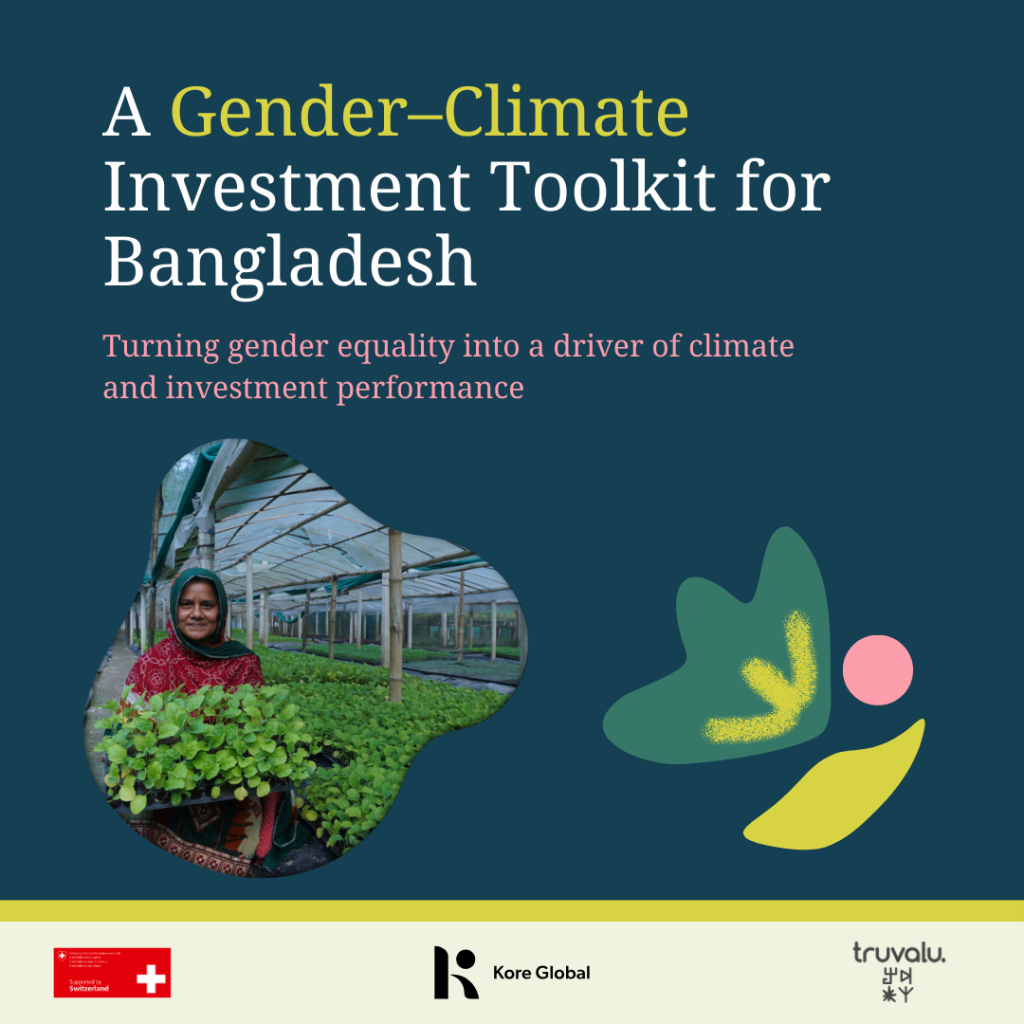
To support this shift, Kore Global and Truvalu — with the support of the Embassy of Switzerland in Bangladesh — have developed a practical Gender & Climate Investment Toolkit.
The Toolkit translates analysis into action. It equips financial institutions, investors, policymakers, and development partners with practical guidance to
Embed gender across the climate investment lifecycle
Structure gender-smart financial products
Strengthen due diligence and impact measurement
Importantly, the Toolkit is not limited to one market. It is currently being piloted in Bangladesh, Kenya, and Colombia — allowing us to test, refine, and adapt its application across diverse climate-vulnerable and emerging market contexts.
Ensuring women entrepreneurs and gender-inclusive SMEs can access climate finance is not only an economic opportunity — it is a matter of rights, justice, and inclusive climate action.
Because in the climate–gender nexus, what we give — in capital, partnership, and commitment — we collectively gain in resilience, prosperity, and equity.
If you would like to learn more about the Gender & Climate Investment Toolkit — or explore collaboration opportunities in Bangladesh and other emerging economies — we invite you to get in touch.
Voices from civil society: What we have learned about preventing GBV in a time of headwinds
Written by: Jenny Holden
Over the past year, Kore Global has had the privilege of leading the external evaluation of the Ford Foundation’s Gender, Racial, and Ethnic Justice – International (GREJ-I) strategy (2020–2024). The GREJ-I programme focuses on preventing gender-based violence (GBV) by supporting organisations — especially those led by and serving women, girls, LGBTQI+ and gender-diverse people in the Global South — to build transformative, sustainable solutions to end violence.
We used a feminist action evaluation approach, guided by principles of participation, intersectionality, and wellbeing. We listened to 55 grantee partners and 23 external stakeholders across Africa, Asia, and Latin America through in-depth conversations, and we synthesised their insights in participatory sense-making workshops. These collective spaces ensured the evaluation was grounded in lived realities and shaped by those closest to the work.
As the world marks the 16 Days of Activism against GBV, the stories coming from those leading prevention efforts are stories of resilience in the face of shrinking civic space and unprecedented uncertainty. Across regions — from West and Southern Africa to India and Latin America — feminist and community-based organisations are working tirelessly to sustain movements, deepen prevention efforts, and reimagine gender justice.
This blog lifts up what we heard — the realities, the resilience, and the lessons — and calls on funders to meet the moment. They are reaching deeper into grassroots movements, channeling flexible resources through strengthened feminist funding mechanisms.
The GBV prevention ecosystem is under immense strain
Across regions, organisations described a global convergence of pressures: reductions in donor spending, polarisation, and escalating challenges. Momentum that had been building around shared agendas for GBV prevention up until early 2024 has stalled, as many organisations have been forced to turn inward simply to cope with the current climate.
This fragility is exacerbated by chronic underfunding. Less than 0.2% of global ODA is directed to GBV prevention efforts (Equality Institute & the Accelerator for GBV Prevention, 2023), whilst resources continue to flow overwhelmingly to Global North institutions, leaving feminist movements and grassroots organisations in the Global South severely under-resourced (Weave Collective, 2024). Recent funding withdrawals have cut billions from gender equality efforts, directly affecting GREJ-I grantees and threatening the sustainability of long-standing feminist organising.
Women’s rights organisations — those with the least resources yet doing the most essential prevention work — are being hit the hardest. This goes to the heart of the GREJ-I programme’s underlying premise: sustainable progress on GBV prevention is only possible when feminist movements are strong, well-resourced, and able to lead. They are reaching deeper into grassroots movements, channeling flexible resources through strengthened feminist funding mechanisms.
Despite these headwinds, feminist movements sustain progress — when trusted and resourced
Even in a difficult environment, GREJ-I partners have shown what is possible with flexible, long-term support.
They have strengthened leadership, governance, and staff wellbeing, building resilience that allows them to stay focused on prevention.
They are shifting harmful norms through trusted relationships with traditional leaders, youth groups, and community networks.
They are improving institutional responses, from supporting the implementation of South Africa’s GBVF National Strategic Plan to shaping gender-sensitive urban planning in India.
They are advancing evidence through intersectional research and practice-based learning, expanding the field’s understanding of what effective prevention looks like.
They are reaching deeper into grassroots movements, channeling flexible resources through strengthened feminist funding mechanisms.
But progress will not hold without urgent, long-term investment in prevention and movement infrastructure
Partners were clear that several systemic gaps threaten the future of GBV prevention efforts:
Prevention remains small-scale and fragmented. Most efforts operate in pilots or isolated pockets, without long-term funding for scale.
Technical capacity gaps persist. Even with strong tools and frameworks, many organisations need prevention-specific training and accompaniment — a need heightened by recent funding cuts.
Data and evidence systems are weakening. Cuts to population-level surveys are creating a looming evidence crisis. Without reliable data, governments cannot track or plan for progress.
Policy implementation is under-resourced. Policies often lack the budgets, staffing, and monitoring systems required for sustained impact.
Addressing these gaps will require coordinated action, strengthened partnerships, new sources of funding, and new imaginings of what long-term, community-rooted prevention can look like.They are reaching deeper into grassroots movements, channeling flexible resources through strengthened feminist funding mechanisms.
A call to funders: This is the moment to show up differently
One message came through clearly from the evaluation: the GBV prevention field needs long-term, flexible, feminist-aligned funding.
Funders such as the Ford Foundation now have an important opportunity to address the identified challenges through the following actions:
Support long-term core funding (ideally 5–10 year cycles): Sustained core support gives organisations the stability they need to plan, retain staff, and build strong, resilient institutions. Multi-year cycles of at least five years — and ideally 5–10 years — align far better with the realities of shifting norms, strengthening systems, and building community trust. Long-term, flexible support helps organisations weather uncertainty and remain focused on prevention, not just survival.
Invest in prevention for the long haul. GBV prevention takes time. It requires trusted relationships, skilled facilitators, consistent community engagement, and the ability to adapt approaches as learning emerges. Short-term grants simply cannot support this. Dedicated, multi-year prevention funding enables organisations to move beyond pilots and deliver interventions at the scale needed to create population-level change.
Strengthen data and evidence infrastructure. Reliable data is essential for tracking progress, understanding risk patterns, and making the case for sustained investment. Yet cuts to population-level surveys and prevalence studies are creating a serious evidence gap. Supporting national data systems, locally-led research, and practice-based learning platforms will be vital to ensuring that prevention work is grounded in credible, up-to-date evidence.
Resource multi-sectoral approaches: GBV prevention requires coordinated action across health, education, justice, social protection, and economic systems — but funding often sits in siloes. A small shift in donor practice could make a transformative difference. For example, if donors consistently earmarked just 0.1% of health and education budgets for GBV prevention, it could radically expand the global funding pool (Equality Institute & the Accelerator for GBV Prevention, 2023).
Create and protect collective learning and support spaces: Across regions, partners emphasised the need for spaces to come together, share insights, navigate political headwinds, and learn from one another. These spaces are especially important now, as organisations grapple with uncertainty and rapid shifts in the landscape. Resourcing convenings, accompaniment models, and regional learning platforms help strengthen the wider ecosystem and ensure organisations are not facing these pressures alone.
We want to thank the GREJ-I team and the Ford Foundation for partnering with us on this evaluation, and to express our deep appreciation to GREJ-I grantees and partners who generously shared their insights and experience. During these 16 Days of Activism, we honour their leadership and resilience. Their work continues to show what is possible when feminist movements are trusted and supported, and we remain committed to walking alongside them in the effort to prevent GBV and advance gender, racial, and ethnic justice.
Find out more about the project here and read the summary of the evaluation findings here.
Beyond the tick box: New DFI portfolio evidence shows gender-lens investing delivers real results for women
Written by: Jenny Holden and Kari Walton
Since its launch in 2018, the 2X Challenge has mobilised over $33 billion into gender-smart investments globally–built on the assumption that meeting the 2X Criteria delivers real benefits for women.
For the first time, we now have portfolio-wide evidence to test that assumption at scale.
Led by Kore Global, a new synthesis of four independent evaluations—covering 81 unique investments across British International Investment (BII), Proparco, FinDev Canada, and FMO’s portfolios—offers the clearest picture yet of how the 2X Criteria play out in practice. Here is what we found.
What the evidence shows
The synthesis reveals three powerful insights that deepen our understanding of what drives gender outcomes across DFI portfolios.
1. The 2X Criteria are a reliable signal—but only a starting point
Across the 81 investments, every top-performing investment with regard to gender outcomes was 2X-qualified, typically under multiple 2X Criteria. This isn’t a coincidence. DFIs are using the 2X framework to successfully identify investments with the structures, commitments, and potential to drive real impact.
But qualification alone doesn’t guarantee results. The data also shows variation within 2X portfolios, revealing that meeting the 2X Criteria thresholds at investment doesn’t necessarily ensure sustained, comprehensive outcomes for women. For this reason, the 2X Criteria should be understood as the floor, not the ceiling—a foundation that must be reinforced through intentional follow-through, technical assistance, and active monitoring.
2. Leadership diversity is a game-changer
One finding in particular stands out above all others: gender-diverse leadership is one of the most powerful predictors of gender outcomes.
All five of the evaluation’s top-performing investments qualified under the 2X Leadership Criterion. These firms didn’t just have women in the room—they had women in senior management and on boards or investment committees, with real decision-making power. And the results showed everywhere: more inclusive workplace cultures, stronger gender targets, better use of sex-disaggregated data, and more innovative solutions tailored to women’s needs.
Yet leadership diversity remains rare, especially in male-dominated sectors like energy, infrastructure, and forestry. Many investments with strong female workforce participation had almost no women in leadership. This represents a significant missed opportunity; supporting women’s pathways into leadership could unlock broader, deeper impact across entire portfolios.
3. Intentionality matters more than sector or geography
The highest-performing investments when it comes to gender outcomes weren’t clustered in specific regions or industries. Rather, top performers across the 81 investments shared four common enablers:
Dedicated resources and structures for gender integration
Systems to collect and use sex-disaggregated data
Clear understanding of local gender contexts and business opportunities
Strong leadership buy-in and values around gender equality
Context shaped what success looked like—from engaging mothers-in-law in South Asia to providing safe transport for women workers—but outcomes were determined by how deliberately clients embedded gender-smart practices. This matters because it means gender impact isn’t predetermined by location or sector, but by choices that DFIs can actively support.
What this means for the field
This synthesis does more than validate the 2X Criteria. It demonstrates that gender-lens investing, done well, delivers measurable development outcomes for women. It shows which levers work, which are underused, and where the greatest opportunities lie.
This synthesis arrives at a pivotal moment. The 2X Criteria were updated in 2024 to make qualifications even more impactful. Key changes include new Governance & Accountability requirements, strengthening the connection between Employment and Leadership Criteria, and introducing a Supply Chain Criterion. These enhancements align with evidence from the synthesis and point to even greater potential for the updated 2X Criteria to deliver meaningful outcomes for women.
The 2X Criteria framework has proven itself as the global standard for gender-smart investing. Now the challenge—and opportunity—is to move from qualification to transformation, from thresholds to sustained impact, from good intentions to outcomes that women can feel. At Kore Global, we see this shift happening across the partners we work with, and we are committed to helping investors, fund managers, and enterprises deepen their gender impact through evidence-driven insights, practical tools, and strategic support. As the field evolves, we look forward to continuing to collaborate with partners who are ready to push beyond compliance and drive real, lasting change.
More than a document: How our feminist strategy development process shaped SVRI’s way forward
Written by: Becky Zelikson, Laura Groggel, Katherine Nichol
Across the social impact sector, strategy development is often treated as an operational exercise focused on frameworks and outputs. The result? Beautifully designed documents that fail to inspire action, sitting disconnected from the communities they are meant to serve. At Kore Global, we believe the how of strategy creation is just as important as the what. Our feminist strategy model is designed to challenge traditional power dynamics, centre lived experience, and build a foundation for genuine, values-driven change.
We believe a strategy process can, and should, model the equity and justice it seeks to promote. In 2024, our collaboration with the Sexual Violence Research Initiative (SVRI) gave us a powerful opportunity to put this belief into practice.
Our feminist approach in action: Co-creating SVRI’s 2025–2030 Strategy
SVRI invited Kore Global to lead the development of its new five-year strategy. The goal was ambitious: to co-create an innovative strategy that builds on SVRI’s proven impact. The process would map the current ecosystem and examine key issues in evidence building, advocacy, and capacity for preventing violence against women and children in low- and middle-income countries. It would also define clear strategic priorities to move the field forward.
In response, we co-designed a deeply participatory process anchored in the voices of SVRI’s vast network. This wasn’t just about consultation; it was about co-creation at every stage.
What this looked like in practice:
Co-creating design principles: Our first step with the SVRI Strategic Planning Committee was to establish the principles for our work together. We started with SVRI’s own values and, through an interactive workshop, established seven principles for the design process, including Kindness & Trauma-Informed, Feminist, and Intersectional approaches to guide our process, interactions and decisions.
Multi-layered stakeholder engagement: We moved beyond a single consultation window, designing distinct engagement points for different groups. This included a global survey for the entire membership, a series of deep-dive consultation webinars with funders, grantees, and partners, and iterative co-design workshops with SVRI’s leadership and governance bodies.
Iterative and non-extractive methods: We recognised that our partners are busy and that their knowledge is valuable. We built on the extensive work SVRI had already done, ensuring we weren’t starting from scratch. We utilised dynamic tools like Mural for anonymous virtual whiteboards, enabling asynchronous and less hierarchical participation.
Intentional ‘feminist pause’: To ensure our process lived up to our principles, we built in a dedicated ‘feminist pause’—a structured moment midway through the project for the SVRI Strategic Planning Committee to reflect on how well we were embodying our co-created values and identify opportunities to course-correct. As a result of this pause, we implemented new tools and review steps to keep the rest of the strategy development firmly aligned with our core values.
The result is a strategy that is more than a roadmap—it is a plan for catalysing connection, collaboration, and creativity. It affirms SVRI’s role as a convenor, amplifier, and co-creator of knowledge that is grounded in feminist principles. The strategy reinforces a commitment to decolonial, culturally rooted knowledge and ensures that research meets the needs of the communities it is intended to serve.
“Kore Global’s ability to navigate complex challenges and bring diverse perspectives together was impressive. Their structured yet flexible approach enabled us to develop a strategic plan that is both practical and visionary—a plan we are very proud of.”
— Elizabeth Dartnall, Executive Director, SVRI
What makes a strategy feminist? Our blueprint
A feminist strategy process doesn’t just ask what needs to change—it asks who gets to decide, how care and reflection are embedded, and whether the process itself models the values it seeks to advance. It is a fundamental shift from extractive, top-down planning to a collaborative, power-aware, and evidence-based journey.
Our approach is guided by core principles that make the process as transformative as the final product:
Power-sharing & transparency: We support the redistribution of decision-making and embed clear accountability mechanisms from the start.
Meaningful participation: We design inclusive, non-extractive processes that value diverse forms of knowledge and centre lived experience.
Decolonisation & localisation: We challenge top-down models by centring local expertise and context.
Care & wellbeing: We recognise the emotional labour involved in this work and build in practices that prioritise the well-being of all participants.
Starting with the personal: We create space to reflect on how our individual identities and positions of power shape the process and its outcomes.
These principles are integrated into our six-phase feminist strategy blueprint, which adapts traditional planning models to deliver strategies that are both principled and practical—from setting up for success with a power-informed approach to driving buy-in with creative, inclusive communication.
A new way forward
Strategy does not have to reproduce the hierarchies we are trying to dismantle. By putting feminist principles at the centre, strategy development can become a practice of care and a space for shared reflection, brave decision-making, and truly inclusive leadership.
We are proud to have partnered with SVRI in developing a strategy that embodies this approach, and we are excited to continue supporting organisations that share our commitment to building a more just and equitable world.
Interested in exploring how our feminist strategy approach can support your organisation? Contact us at contact@koreglobal.org and learn more about our work.
AI and Gender-Lens Investing: Considerations for Monitoring and Evaluation & Investment Decision-Making
Written by: Becky Zelikson, Analyst
Kore Global recently participated in MERL Tech’s Gender, MERL & Artificial Intelligence (AI) working group launch, part of their Natural Language Processing (NLP) Community of Practice. The discussions sparked reflection on how AI intersects with gender-lens investing and its evaluation. This feels particularly timely given our recent and ongoing evaluation work with British International Investment (BII), Proparco, and FinDev Canada examining their gender-lens investment portfolios. While AI hasn’t yet emerged as a significant tool in these evaluations, it is likely to become increasingly relevant as more investment flows toward AI companies and as businesses across sectors integrate AI capabilities. Drawing on insights from our evaluation experience and recent work examining AI in research contexts (including our blog on handling AI-generated survey responses), we wanted to share some reflections on how AI might affect gender-lens investing and its evaluation going forward.
As artificial intelligence reshapes the investment landscape, it offers both opportunities and challenges for gender-smart business practices. While AI systems could help address a crucial gap in gender-lens investing by enhancing the collection and analysis of gender and disaggregated data – from pay gaps to promotion rates – their adoption requires careful consideration of embedded risks and biases.
AI in Gender-Smart Business Practices: Opportunities and Embedded Risks
Consider an AI system being trained to identify promotion-ready candidates using historical promotion data. If a company’s past twenty years of promotion data shows that 80% of senior leadership promotions went to white, able-bodied men, the AI system may learn to associate “promotion potential” with patterns more common in white male candidates’ profiles. For instance, it might give higher weight to the following:
Uninterrupted career progression (e.g. disadvantaging those who took parental leave)
Traditional full-time work patterns (e.g. overlooking those with flexible arrangements)
Specific leadership styles historically associated with white male executives (e.g. assertiveness over collaboration)
Educational backgrounds from institutions or fields historically dominated by white men
Career paths that reflect greater access to informal mentorship networks (e.g. disadvantaging racial minorities, immigrants, and others without pre-established access to such professional networks)
Without explicit correction, the AI system treats these historical patterns as “successful” examples rather than recognising them as potential indicators of systemic bias. The system then replicates these biases when evaluating current candidates, effectively creating a self-reinforcing cycle where the AI identifies candidates similar to those historically promoted, who then receive promotions, and their data feeds back into the system as new “successful” examples, further entrenching the biased pattern. This is particularly problematic because AI systems can give these biased decisions an appearance of objectivity through complex algorithms and data analysis, making the discrimination harder to identify and challenge than when it comes from human decision-makers.
To address these challenges while leveraging AI’s potential benefits, companies need to consider several critical questions:
How do automated HR systems impact gender-diverse recruitment and retention?
Are AI-powered performance evaluation tools designed with gender considerations and diversity, equity and inclusion in mind?
Do workplace automation decisions consider differential impacts on women employees, employees of colour, employees with disabilities, as well as those at the intersections of multiple marginalised identities?
What safeguards are in place to identify and correct bias in AI systems?
How can AI be used to support rather than undermine gender-smart and socially equitable business practices?
Transparency and Disclosure
As companies increasingly integrate AI into their operations and reporting, questions arise about disclosure requirements. Should companies be encouraged or required to report which AI tools they use for metrics and analysis? This transparency could be informative to impact investors making ethical investment decisions.
For instance, if a company uses AI services from providers known for problematic practices – such as military contracts or non-consensual data scraping – this could conflict with investors’ ethical investment principles or goals. The challenge is compounded by the complex web of AI service providers and their varying ethical standards. A company might be using multiple AI services across different operations, from HR analytics to customer service, without fully disclosing these relationships to investors. This lack of transparency means impact investors could unknowingly be channeling capital to companies that rely heavily on AI providers whose practices conflict with investors’ ethical principles.
Environmental Considerations
The environmental impact of AI usage presents another crucial consideration for gender-lens and climate-smart investors. Large language models and AI systems require significant computational power, contributing to growing energy consumption and carbon emissions. This raises important questions about the trade-offs between improved impact data collection and environmental sustainability – a consideration that particularly affects women, particularly more vulnerable women in the Majority World, who often bear the brunt of climate change impacts.
Ethical AI Use in Practice
Companies might be tempted to rely heavily on AI for gender and other impact metrics due to its efficiency and scalability. However, this approach requires careful ethical frameworks. Key considerations include:
Ensuring AI systems respect privacy when collecting gender-related data and data on other social characteristics
Using AI analysis to complement rather than replace human oversight in gender equity and social equity assessment
Establishing rigorous processes for validating AI-generated insights about gender, racial, disability, and other patterns and trends
Establishing ethical guidelines for AI use in gender-related and equity, diversity, and inclusion decision-making, as well as throughout all company operations
Likewise, gender- and climate-smart investors may need to develop new criteria for evaluating companies’ AI practices, considering not just the presence of gender- and disaggregated data but also how that data is collected and analysed. This could include assessing the transparency of AI systems used, the environmental impact of AI operations, the ethical track record of AI service providers, and the company’s frameworks for preventing AI bias. Where companies do not yet have these transparency measures, investor due diligence could be as simple as asking questions about AI usage and providers directly to the company.
AI in Investment Decision-Making
As investment firms increasingly adopt AI-powered tools for deal sourcing and due diligence, we need to examine how these tools might impact gender-lens investing. Could AI help identify promising women-led businesses that traditional methods might overlook? Or might AI systems, trained on historical investment data that favours companies led by white able-bodied males, inadvertently perpetuate existing funding gaps? The key lies in deliberately incorporating gender-smart criteria, such as the 2X Criteria, as well as a racial equity lens, indigenous lens, disability lens, LGBTQI+ lens, child lens, and other equity and inclusion considerations into AI systems’ evaluation frameworks, as well as ensuring human oversight of AI system recommendations.
Recommendations
To ensure AI supports rather than hinders gender-lens and social impact investing objectives, we recommend:
Developing frameworks for assessing AI systems’ impact on gender and social equity within investment processes.
Ensuring AI tools used in impact measurement incorporate gender-specific and other social equity metrics and considerations.
Supporting diverse women’s leadership in AI development to ensure diverse perspectives shape these technologies.
Creating accountability mechanisms for AI-powered investment tools to prevent gender, racial, and other biases.
The intersection of AI and gender-lens investing presents both opportunities and challenges. By proactively considering these aspects in our evaluation frameworks, we can work to ensure that technological advances support rather than undermine the goals of gender-smart and social impact investing.